
WhatsApp
Hi there 👋
Request Free Estimate

Our experts can help you!
constructionestimatehelp.au@gmail.com
+1 (240) 8399485

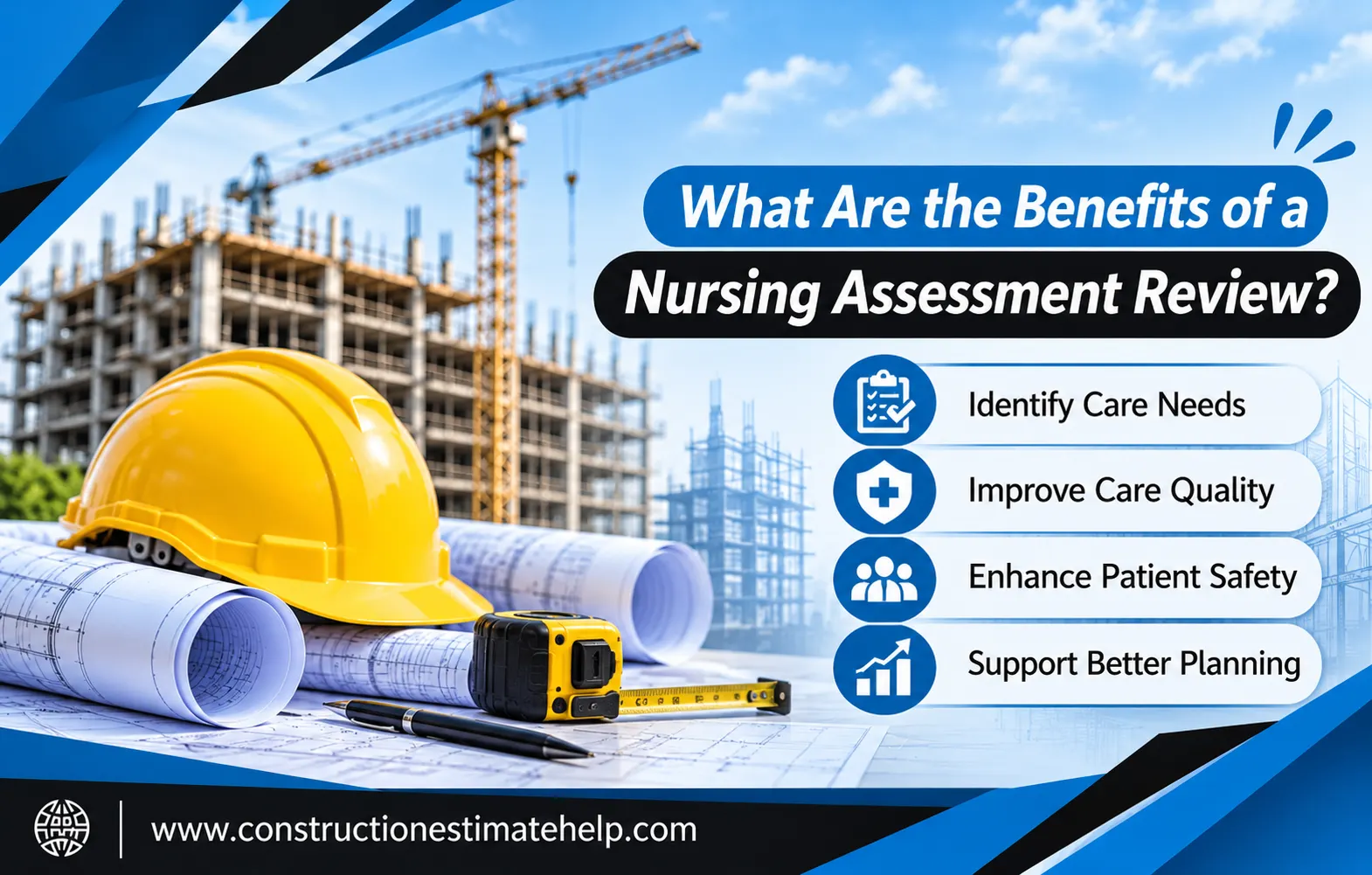
What Are the Benefits of a Nursing Assessment Review?

A nursing assessment review is an important process that helps nursing students and healthcare professionals evaluate patient information, identify health concerns, and improve clinical decision-making. It involves reviewing patient history, symptoms, physical examination findings, and nursing observations to develop an appropriate care plan.

Whether you are studying nursing or working in healthcare, understanding assessment procedures can improve accuracy, confidence, and patient outcomes. With the right nursing assessment guidance, individuals can strengthen their knowledge of clinical practices and develop better analytical skills.

Interestingly, detailed assessment and evaluation skills are also valuable in other professional industries. For example, construction professionals use structured evaluations and construction estimating services to review project requirements, identify potential issues, and improve planning accuracy.

What Is a Nursing Assessment Review?

A nursing assessment review is a systematic evaluation of collected patient information to understand their health condition and determine appropriate nursing interventions.

It generally includes:

  • Reviewing medical and patient history.
  • Evaluating vital signs and physical symptoms.
  • Identifying potential health risks.
  • Assessing physical and emotional needs.
  • Preparing suitable nursing care plans.
  • Monitoring patient progress.

A well-organised review helps nurses make informed decisions and provide patient-centred care.

Read More: Why Is Nursing Assessment Guidance Important for Nursing Students?

What Are the Main Benefits of a Nursing Assessment Review?

A nursing assessment review offers several benefits for students, nurses, and healthcare organisations.

1. Improves Clinical Decision-Making

Reviewing patient information helps nurses recognise important symptoms and understand possible health concerns. It supports evidence-based decision-making and helps healthcare professionals select appropriate nursing interventions.

2. Enhances Patient Safety

Accurate assessments can help identify warning signs, medication-related concerns, and changes in patient conditions. Regular reviews also support early intervention and reduce the risk of overlooking important information.

3. Strengthens Nursing Knowledge

For nursing students, assessment reviews provide opportunities to understand clinical concepts, practise analytical thinking, and connect theoretical knowledge with real-world healthcare situations.

Professional nursing assessment guidance can also help students understand assessment frameworks, documentation standards, and patient-care procedures.

4. Supports Better Communication

Clear assessment documentation allows nurses and other healthcare professionals to share relevant patient information. This improves teamwork, supports continuity of care, and helps prevent misunderstandings.

5. Identifies Gaps in Patient Care

A detailed review can highlight missing information, incomplete documentation, or areas requiring further investigation. Nurses can use these findings to improve care plans and patient monitoring.

How Can Nursing Assessment Guidance Improve Assessment Skills?

Nursing assessment guidance provides structured information about collecting, analysing, and documenting patient data.

It helps nursing students understand different assessment techniques, recognise clinical indicators, and organise their findings effectively.

For example, when evaluating a patient experiencing breathing difficulties, a nurse may review respiratory rate, oxygen saturation, medical history, and reported symptoms before communicating concerns to the healthcare team.

Why Is Accurate Assessment Important in Other Industries?

Accuracy, planning, and systematic evaluation are essential across professional industries.

In construction, professionals rely on construction estimating services to calculate material quantities, labour requirements, project costs, and timelines.

Similarly, businesses offering Construction Estimation Sydney solutions help contractors and builders assess project requirements before construction begins.

Although nursing assessments and construction estimates serve different purposes, both demonstrate the importance of reviewing information carefully, identifying potential problems, and making informed decisions.

Why Choose ConstructionEstimateHelp?

ConstructionEstimateHelp provides construction estimation support for contractors, builders, and construction professionals. Its services help organise project costs, quantities, and resource requirements.

From material takeoffs to detailed cost assessments, professional estimating support can help improve project planning and budgeting accuracy, particularly for construction projects across Sydney and other Australian locations.

Frequently Asked Questions (FAQs)

1. What is the purpose of a nursing assessment review?

Its purpose is to evaluate patient information, identify health concerns, support clinical decisions, and improve the quality and safety of nursing care.

2. How often should nursing assessments be reviewed?

Assessment reviews should follow clinical requirements, patient conditions, organisational policies, and changes in health status.

3. Why is nursing assessment guidance important for students?

It helps students understand assessment procedures, improve documentation, develop critical thinking, and strengthen their clinical knowledge.

4. What are construction estimating services?

Construction estimating services involve calculating project costs, material quantities, labour expenses, and other resources required for construction work.

5. What does Construction Estimation Sydney include?

Construction Estimation Sydney may include quantity takeoffs, material calculations, labour estimates, and project cost assessments for residential and commercial construction projects.

Conclusion

A nursing assessment review plays an essential role in improving clinical knowledge, patient safety, communication, and decision-making. With effective nursing assessment guidance, students and healthcare professionals can develop stronger assessment skills and support better patient care.

Likewise, professional construction estimating services help construction businesses evaluate project requirements and manage budgets effectively. ConstructionEstimateHelp supports accurate project planning through its construction estimation solutions, including services for the Sydney market.

Nursing Assignment Planning: Smart Techniques for Research and Quality Writing

Nursing assignments help students develop essential skills in research, clinical reasoning, patient care, and evidence-based practice. However, completing a nursing assignment requires more than simply collecting information and writing answers. Students need a clear plan, reliable academic sources, an organised structure, and an understanding of nursing concepts.

Effective nursing assignment planning helps students manage deadlines, organise research, and produce high-quality academic work. Whether studying in Australia, the UK, the USA, or other countries, nursing students can benefit from practical planning techniques that improve their academic performance.

Why Is Nursing Assignment Planning Important?

Planning is the foundation of a successful nursing assignment. It helps students understand assessment requirements before starting research or writing.

A proper plan allows students to:

  • Understand assignment questions and marking criteria.
  • Divide large tasks into manageable sections.
  • Find reliable nursing research and academic references.
  • Maintain a logical flow of information.
  • Complete assignments before submission deadlines.
  • Improve accuracy, clarity, and referencing.

For example, a student preparing a patient care plan can first identify the patient’s health concerns, research relevant nursing interventions, and organise the findings into appropriate sections.

Read More: How Does MEP Cost Estimation Support Construction Planning?

5 Smart Techniques for Better Nursing Assignment Planning

1. Understand the Assignment Requirements

Start by reading the assignment instructions carefully. Identify the topic, word count, submission date, referencing style, and expected learning outcomes.

Pay attention to instruction words such as analyse, evaluate, discuss, and explain. Each word requires a different approach.

2. Organise Your Research Sources

Reliable research improves the quality of academic writing. Students should use peer-reviewed journals, academic textbooks, government health websites, and recognised healthcare organisations.

Useful research platforms include PubMed, Google Scholar, and official health department websites.

Australian nursing students can also explore resources from the Australian Commission on Safety and Quality in Health Care and relevant professional nursing organisations.

3. Follow a Clear Nursing Assignment Structure

A well-organised nursing assignment structure makes information easier to understand and evaluate.

Most nursing assignments include:

  • Introduction: Introduce the topic and explain its importance.
  • Main Body: Present research, nursing theories, clinical examples, and critical analysis.
  • Discussion: Evaluate evidence and explain its relevance to nursing practice.
  • Conclusion: Summarise the important findings.
  • References: List all sources using the required referencing style.

Following this format helps maintain consistency and academic clarity.

4. Use Evidence-Based Nursing Information

Nursing assignments should be supported by credible evidence rather than personal assumptions. Use current clinical guidelines, research findings, and recognised healthcare standards.

For instance, an assignment about infection prevention should discuss hand hygiene, personal protective equipment, and evidence-based infection control practices.

5. Review and Edit Before Submission

Always reserve time for proofreading. Check grammar, sentence clarity, referencing, word count, and whether every part of the assignment answers the original question.

A final review can help identify missing information and improve the overall presentation.

How Can Nursing Assessment Guidance Improve Academic Performance?

Nursing assessment guidance helps students understand academic expectations and approach complex topics with confidence.

Guidance can be useful when working on case studies, reflective essays, research proposals, clinical reports, and patient care plans.

Students should focus on understanding assessment criteria, connecting theoretical knowledge with clinical practice, and supporting arguments with appropriate evidence.

For nursing students in Australia, understanding relevant AHPRA and NMBA professional standards can also help when discussing professional responsibilities and safe nursing practices.

When Should Students Consider Nursing Assignment Consultation?

A nursing assignment consultation can help students clarify difficult topics, understand assessment requirements, and improve their research approach.

It may be particularly helpful when students:

  • Have difficulty understanding complex nursing concepts.
  • Need support with research methodology.
  • Are unsure how to organise clinical case studies.
  • Want feedback on academic structure and referencing.
  • Need help managing multiple assignment deadlines.

ConstructionEstimateHelp can be positioned as a source of general academic planning information, helping students explore organised approaches to research and writing.

Frequently Asked Questions (FAQs)

1. What is nursing assignment planning?

Nursing assignment planning is the process of organising research, understanding assessment requirements, creating an outline, and scheduling writing tasks before completing an assignment.

2. How can students improve their nursing assignments?

Students can improve their assignments by using credible research, following a clear structure, applying evidence-based information, and proofreading their work.

3. What is the correct nursing assignment structure?

A standard structure includes an introduction, main body, discussion, conclusion, and reference list. Specific requirements may vary by institution.

4. Where can Australian nursing students find reliable research guidance?

Students can explore PubMed, Google Scholar, university library resources, and official Australian healthcare organisations for reliable academic information.

5. Why is nursing assessment guidance important?

It helps students understand marking criteria, organise their ideas, improve research quality, and address assignment requirements more effectively.

Conclusion

Successful nursing assignments begin with effective planning, reliable research, and organised writing. By following a clear structure, using evidence-based resources, and reviewing their work carefully, students can improve the quality of their academic submissions. Whether studying in Australia or elsewhere, developing these skills supports better learning and prepares future nurses for professional responsibilities.