WhatsApp
Hi there 👋
Request Free Estimate

Our experts can help you!
constructionestimatehelp.au@gmail.com
+1 (240) 8399485

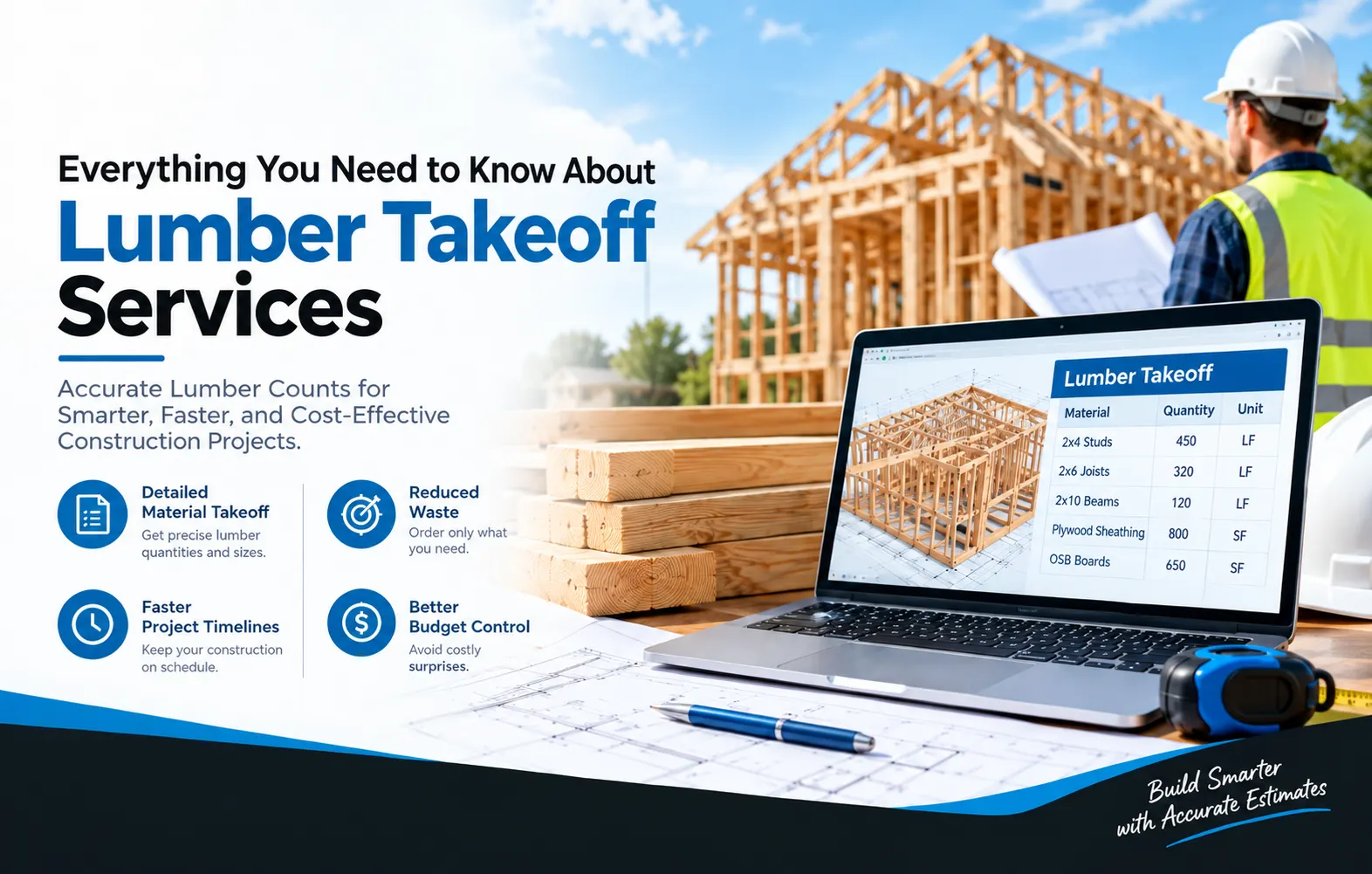
Everything You Need to Know About Lumber Takeoff Services

Accurate amounts of materials are key to controlling construction costs cutting waste and creating bids. Lumber Takeoff Services help contractors, builders, estimators and project managers determine the amount of wood materials required for a construction project. From framing lumber and sheathing to beams, joists and studs a detailed takeoff provides a material list before purchasing begins.

I find that for commercial projects professional Quantity Takeoff Services can make estimating faster and more organized. When combined with construction estimating services lumber takeoffs help construction professionals make better budgeting and procurement decisions.

What Are Lumber Takeoff Services?

Lumber Takeoff Services involve reviewing construction drawings, specifications and project documents to calculate the quantity and type of lumber needed.

A typical lumber takeoff may include:

– Wall studs and plates

– Floor joists

– Roof rafters and trusses

– Beams and posts

– Plywood and OSB sheathing

– Headers and blocking

– lumber

– Engineered wood products

The final takeoff generally provides material descriptions, sizes, quantities and other relevant measurements needed

measurements needed for estimating and purchasing.


Read More: A Complete Guide to Lumber Takeoff Services


Why Is a Lumber Takeoff Important?

1. Improves Material Accuracy

I see that a detailed takeoff reduces the possibility of ordering much or too little material. Accurate quantities can help contractors avoid expenses and project delays.

2. Supports Better Cost Estimation

I believe that material quantities form a part of a construction budget. A reliable takeoff allows estimators to apply material prices and calculate more realistic project costs.

3. Reduces Material Waste

I notice that overestimating lumber can result in inventory while underestimating can lead to additional orders and delivery delays. Proper quantity calculations help maintain material control.

4. Helps Contractors Prepare Bids

I think accurate material information enables contractors to prepare bids based on measurable project requirements rather than assumptions.

How Does a Lumber Takeoff Work?

I observe that the process usually begins with reviewing structural and engineering drawings. An estimator identifies lumber‑related components. Calculates their dimensions and quantities.

I understand that for example if a project requires 2×4 wall studs the estimator considers wall lengths, spacing, openings and other framing requirements to determine the estimated quantity.

I see that the calculated quantities can then be organized into a material schedule for pricing and procurement.

Lumber Takeoff vs. Other Quantity Takeoffs

I note that Quantity Takeoff Services cover more than lumber. Depending on the project takeoffs may include concrete, masonry, drywall, roofing, electrical, plumbing and other construction materials.

I see that a lumber takeoff specifically focuses on wood‑related materials. For example a drywall estimate may calculate board quantities whereas a lumber takeoff focuses on framing members and wood products.

I find that it is also important not to confuse lumber estimating with a plumbers pricing guide. A plumbers pricing guide is generally used to understand plumbing labor, materials or service pricing while lumber takeoffs focus on wood material quantities.

Where Can Contractors Use Lumber Takeoff Services?

I observe that lumber takeoffs are useful for projects across Australia, the USA, Canada and other construction markets including houses, commercial buildings, renovations, additions and framing projects.

I think that for contractors searching for construction estimating services in Australia lumber estimating services in the USA or takeoff support for local building projects outsourced estimating can provide additional capacity without requiring an in‑house estimating team.

How ConstructionEstimateHelp Can Help

I see that ConstructionEstimateHelp provides estimating support designed to help contractors and construction professionals organize project quantities and costs effectively. Professional takeoff assistance can be particularly useful when project drawings are detailed deadlines are short or multiple bids need to be prepared

I think accurate Lumber Takeoff Services can help transform construction drawings into material information that supports budgeting, purchasing and bidding decisions.

Frequently Asked Questions

What does a lumber takeoff include?

I note that a lumber takeoff can include studs, joists, rafters, beams, posts, plates, sheathing, blocking and other wood materials shown in project drawings.

How accurate are lumber takeoffs?

I believe that accuracy depends on the quality of drawings, project specifications, measurements and estimating methodology. Clear and complete construction documents generally support reliable results.

Can lumber takeoffs help reduce construction costs?

I think yes. By identifying required quantities accurately takeoffs can reduce unnecessary material purchases improve budgeting and minimize material waste.

Who needs lumber takeoff services?

I see that general contractors, subcontractors, builders, developers, remodelers, suppliers and construction estimators can benefit from lumber takeoff support.

Are lumber takeoffs, for bidding?

I think yes. A detailed material quantity list provides contractors with information needed to calculate material costs. Prepare more informed project bids.

Final Thoughts

I have seen how a reliable lumber takeoff changes the game by giving a base, for construction estimating, procurement and bidding. By spotting the wood materials that are needed and the amounts that are required contractors can keep cost control tight reduce waste and make better project decisions. When professional Quantity Takeoff Services are joined with construction estimating services construction teams can face projects with greater confidence.

How Are Lumber Takeoff Services Used in Residential Construction?

Residential construction projects depend on planning, precise material calculations and strong cost control. One of the important steps in this process is figuring out exactly how much lumber a project will need before buying materials or creating a bid. This is where Lumber Takeoff Services become essential. These services help contractors, builders and project managers analyze construction drawings and specifications to determine the amount and types of lumber required.

What Are Lumber Takeoff Services?

A lumber takeoff is the process of going through structural plans to identify and count all the wood materials needed for a home construction project. A detailed takeoff can cover framing lumber, floor joists, wall studs, roof rafters, beams, headers, plywood, OSB and any other wood-based products used in the build.

Professional Lumber Takeoff Services turn the information from blueprints into organized material lists. This allows builders to know what they need before placing orders or creating cost estimates.

How Are Lumber Takeoffs Used in Residential Construction?

1. Planning Material Requirements

A lumber takeoff helps figure out the estimated amounts of materials needed at each stage of construction. For example a framing takeoff can show how many studs, joists, rafters and beams are required, along with their sizes.

This clear breakdown makes it easier to plan materials and lowers the chance of missing something

2. Preparing Accurate Project Estimates

Materials are a part of construction costs. Contractors can use the quantities from a takeoff, combined with supplier prices to estimate material expenses.

When added to labor, equipment, subcontractor fees and other costs these numbers help create complete and accurate project estimates. That’s why Quantity Takeoff Services are often used with construction estimating services.

3. Reducing Material Waste

Ordering much lumber increases costs. Ordering little leads to delays. A prepared takeoff gives a reliable base for buying materials.

Even though real-world conditions or design changes can affect what is needed accurate calculations help contractors make decisions and cut down on waste.

4. Supporting Bidding and Budgeting

Builders and subcontractors often need to submit bids. A detailed lumber takeoff helps them understand the material scope before calculating their bid.

The same information helps homeowners, builders and project managers set a budget. It also makes it easier to compare costs between different project plans.

5. Improving Communication

A takeoff gives everyone on the team—contractors, suppliers, estimators and project managers—a shared reference. Of guessing or using rough estimates team members can work from a clear list of materials and quantities.

When drawings change the takeoff can be updated to reflect those changes keeping everyone on the page.

Why Use Professional Construction Estimating Services?

Creating a lumber takeoff by hand can take a time especially for large homes or projects with complicated designs. Professional construction estimating services help save time and deliver organized quantity data for estimating and procurement.

Builders looking for a construction estimator near me might want to check if the estimator has experience with framing reading construction drawings, material pricing and estimating software. Construction estimating companies often offer takeoff. Estimating support for contractors working on several projects at once.

Lumber Takeoff Services from Construction Estimate Help

Construction Estimate Help offers estimating support for construction professionals who need material quantities and cost information. Lumber takeoffs can help residential contractors plan materials prepare bids and build structured budgets.

By combining quantity data with strong estimating practices contractors gain better visibility into costs and have clearer material plans.

FAQ

What does a lumber takeoff include?

A lumber takeoff can include studs, joists, rafters, beams, headers, sheathing, framing materials and other wood products that appear in the project drawings.

Why are lumber takeoffs important?

They help contractors know how much material to buy, plan budgets create bids and organize construction work.

Can lumber takeoffs be used for homes?

Yes. Lumber takeoffs are commonly used for home construction, additions, renovations and framing projects.

Are Quantity Takeoff Services different, from lumber takeoffs?

Yes. Quantity takeoffs can include types of construction materials while a lumber takeoff focuses only on lumber and wood-based products.

Can Construction Estimate Help assist with estimates?

Yes Construction Estimate Help offers construction estimating support that helps contractors organize material quantities and build project cost estimates.

Best Construction Takeoff Software in Australia: 2026 Buying Guide

Accurate take off is what Australian builders, contractors and construction companies require to control project costs and put forth competitive bids. As digital tools are advancing we see that choice of the best construction takeoff software in Australia which in turn saves time, reduces calculation errors and improves estimation efficiency.

What Is Construction Takeoff Software?

Construction take off software which does for estimators what they used to do with paper blueprints and spreadsheets but in a digital format. We see that instead of going through the manual review of physical blueprints or spreadsheets, the present time has digital measurement tools at the users’ disposal which in turn is which which improve the speed at which quantities are calculated.

Today we see that many platforms also include estimating, pricing databases, reporting, project management, and collaboration tools. Also they have use in residential, commercial, civil and renovation projects.

How to Choose Construction Takeoff Software

Knowing that which construction takeoff software to use comes from first identifying what your business needs. For Australian builders this includes:.

1.Digital Plan Compatibility:

Choose which software products support wide range of PDF, CAD and digital construction plans. Easy upload and navigation will in turn speed up the process of takeoffs.

2.Measurement Features:

Search out tools which do very well in what they measure out linear, areas, counts, volumes and other quantities. Also look for which have auto scale and measurement features which in turn will reduce your manual work.

3.Estimating Integration:

The software must present an easy transition from takeoff to estimates. Also integration with pricing databases and estimating tools improves consistency.

4.Australian Construction Requirements:

In terms of construction takeoff software for the Australian builder consider platforms which support Australian measurement practices, local material pricing, GST calculations, and regional workflows.

5.Ease of Use:

A simple interface is the key to better productivity. I look for software which has an intuitive design, clear metrics, training materials, and excellent customer support.

6.Collaboration and Cloud Access:

Cloud based solutions may be used by estimators, project managers and contractors which will enable them to access drawings and take off info from any location.

What is the top take off software in the construction field?

There isn’t a one size fits all platform for every business. Which construction project management software is best is a question that depends on project size, estimating workflow, budget, team requirements, and the type of construction work you do.

Small builders may go for budget friendly software which has easy measurement tools, while larger contractors may require in depth estimating, database management, report generation and multi user collaboration.

Before you buy try out a demo or free trial. Look at measurement accuracy, performance of integration, ease of use, customer support, and how it fits into your present workflow.

What is the cost of Construction Takeoff software in Australia?

In Australia the price for construction takeoff software varies by which provider you go with, what features are included, number of users, and what the subscription model is. At the basic level we see very affordable monthly plans but for the more advanced platforms which include estimating, cloud collaboration, integrations and enterprise features the price goes up.

Australian construction companies are going beyond price as the sole factor in their choice. Instead they should look at what the savings in terms of time to estimate, in reduced errors, and improved bidding processes a better platform may bring. Also a more robust platform which is consistent in its delivery of saving hours of manual work will pay off.

Accurate Takeoffs are Key for Australian Builders

An inexact take off may cause material shortfalls, incorrect labor rates, unexpected expenses, and uncompetitive bids. With the use of reliable takeoff software estimators is able to put together a detailed quantity list and determine project needs which in turn allows them to price the work out correctly.

Also software is a component of good estimates. Working with a professional estimating company which has in depth knowledge in the field can add value to your project when it is complex or when the estimating work load becomes too much.

Professional construction estimating services also support in quantity takeoffs, material pricing, labor calculations, and in preparing detailed cost estimates. This is very beneficial for Sydney based construction companies and contractors that are handling multiple tenders at the same time.

Final Thoughts

In Australia the best construction takeoff software will improve the speed and accuracy of your quantity measurements and ease of use. In 2026 when you do your comparisons which in turn will inform your purchase decision look at measurement features, which workflows in Australia are supported, what integrations are present, ease of use, what collaboration tools they have and overall value for money instead of going with what is the cheapest.

For construction professionals that require extra support, Construction Estimate Help we present a great addition to digital takeoff tools which brings in professional construction estimating support, we also see this as a solution that enables businesses to put together very accurate and reliable project estimates.

Frequently Asked Questions

What is construction take off software?

Construction software for takeoff is a digital solution which does quantity and dimension take off from shop drawings and also prepares the info required for project estimates.

What are the top take off programs in construction?

For your best option we look at your project type, business size, what features you require, your budget, and estimating workflow. Also a trial or demo can do the job in determining which platform is for you.

Which construction takeoff software to choose?

Compare in terms of drawing compatibility, measurement tools, integration, what the Australian requirements are, ease of use, cloud access, what for collaboration we have, support and total cost.

In what range does the price of construction takeoff software fall in Australia?

Pricing is at the discretion of the provider, also based on features, users, and subscription plan. We advise businesses to compare total cost against expected productivity and estimated savings.

Do Australian builders use takeoff software for tenders?

Yes. Take off software can also be used to determine quantities and put together project data that in turn is applied when putting out tender estimates and bids.

Do as a developer of the software do I still need construction estimating services?

Software can perform measurements and do the calculations, but professional construction estimating companies bring in their expertize for complex projects, detailed pricing, and high volume tendering.

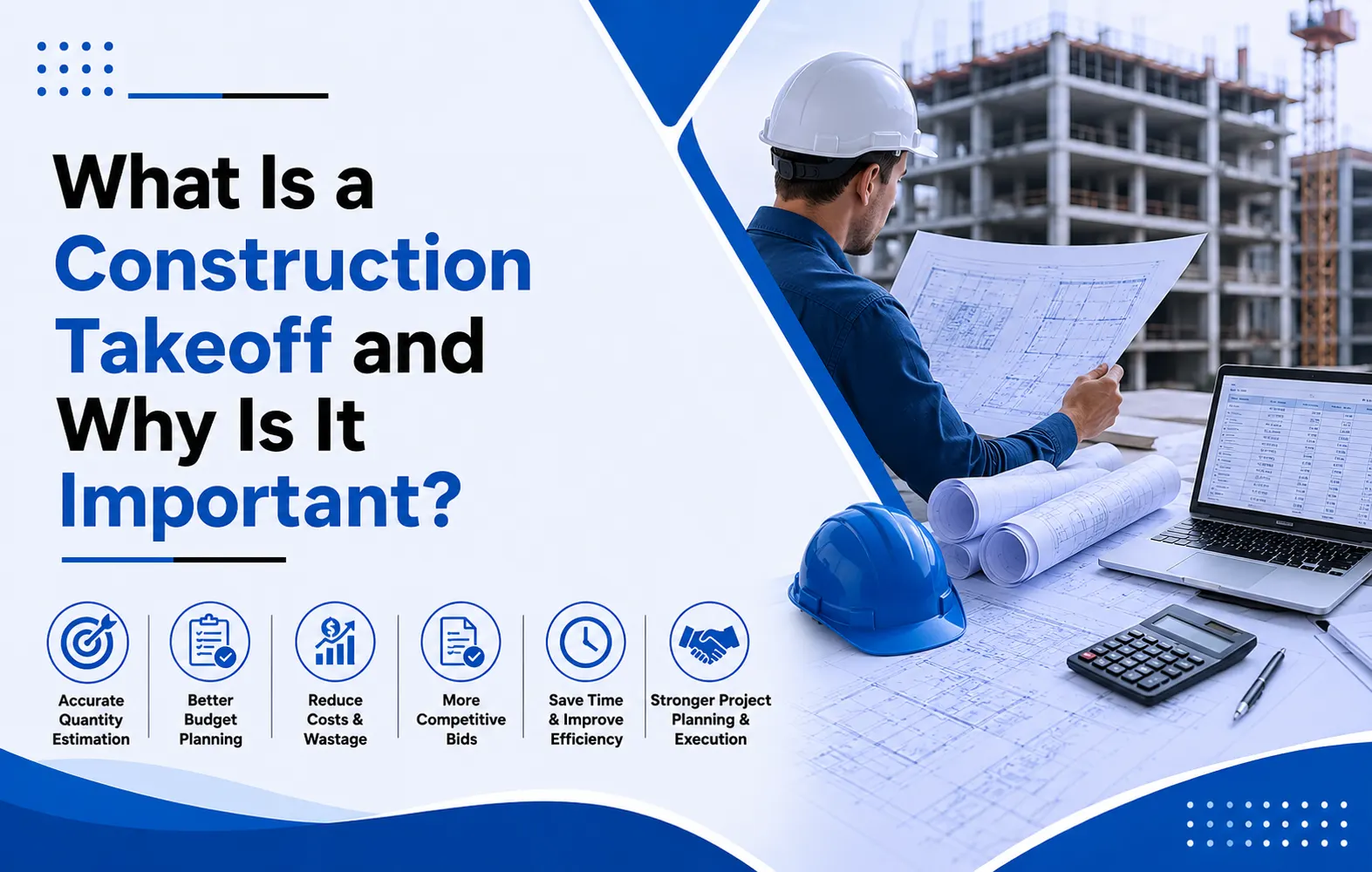
What Is a Construction Takeoff and Why Is It Important?

A construction takeoff is the process which includes the identification and measurement of all the materials, quantities and components that go into a construction project. This is a key element of pre construction planning as it allows contractors, builders, estimators and project managers to know precisely what is required for a project to come together before work commences.

From brick and mortar to wood, drywall, roofings, electrical elements, and finishes, a detailed take off presents a break down of the materials required. Professional takeoff techniques also play a role in transforming project blueprints and specs into useful quantifiable data which in turn supports accurate budgeting and bid pricing.

What Does a Construction Takeoff Include?

A construction takeoff is usually a review of architectural drawings, structural plans, engineering reports, which also includes project specifications. We see in this process that estimators determine what materials will be needed and at what quantities, measurements and in what units.

In some projects a takeoff may include:

  • Concrete and masonry quantities
  • Lumber and structural materials
  • Drywall and insulation
  • Roofing materials
  • Flooring and finishes
  • Plumbing components
  • Electrical materials
  • Doors and windows
  • Sitework and landscaping materials

Today modern estimating software which does for the estimator what once required extensive man hours it includes the ability to work with digital drawings, to manage materials and labor quantities with ease, and to present detailed reports.

Why Is a Construction Takeoff Important?

1.Reduces Cost Errors

A great benefit of in depth takeoff is better cost control. We see that accurate quantities which we put into the equations allow for the use of present material and labor prices which in turn allows us to do away with a lot of guess work and we are able to create a stronger base for project budgets.

This is the reason that many contractors use construction estimating services in addition to detailed takeoff for their bids and project budgets.

2.Reduces Waste of Materials

Ordering out of what is required raises project costs, also if one orders too little it may cause delays. Accurate Construction Takeoff Services which in turn help contractors to determine better material requirements and which also reduce waste.

3.Supports Competition Based Procurement

Construction companies in some cases put out a bid which can win them the project. Also with accurate break down of the quantity contractors are able to determine what they will have to invest in terms of materials and labor before they present their bid.

Professional Construction Take off services also which in turn help contractors put together competitive bids at the same time which does not affect their bottom line.

4.Saves on Time

Manually going through large sets of construction drawings is very time consuming. Outsource takeoff to professional estimators which will allow contractors to put their energy into bidding, project management, and client communication as well as other key tasks.

5.Improves Project Planning

A take off is also a useful tool in bidding. We also see value in it for procurement and scheduling. With it project teams are able to determine material requirements which in turn allows for better coordination of construction activities.

Construction Draw Takeoff for Various Projects

Construction Quantification Services we see to residential, commercial, industrial, and renovation projects. Per project requirements estimators may put together trade specific takeoffs or a full material report.

For contractors in Australia that is also the case where Local pricing, construction practices, and project requirements come into play, our services in Sydney are very much at your service.

Why Choose Professional Takeoff Services?

Preparing exact takeoffs requires attention to detail, knowledge of construction materials, and the ability to read drawings well. We also see that professional services which put together quantity reports which in turn make the estimating and bidding process smoother.

At Build Estimate Pro contractors and construction professionals have access to our estimating tools which we designed to simplify the pre construction process. We offer Local Construction Takeoff Services and also in depth estimating support for very specific needs. Professional support from our team also helps to improve efficiency and reduce large scale quantity issues.

Conclusion

A construction take off is the base for accurate estimating, material purchase, bidding, and project planning. Through precise identification of what quantities are needed we see that contractors are able to do better financial planning, reduce waste, and put forth more reliable project proposals.

For companies that are managing many bids at once or large scale construction drawings we see value in Professional Construction Takeoff Services which in the end saves time and increases confidence in the estimating process.

Frequently Asked Questions

What is a construction takeoff?

A construction take off is outlay of materials and quantities for a given construction project as per drawings, plans and specifications.

Who uses construction takeoff services?

Contractors, subcontractors, builders, developers, estimators, and construction companies use in fact what are known as takeoff services for their project’s budget, bid, procurement, that which is related to construction.

How in which a construction takeoff improves estimating?

A in depth take off which is very detailed gives out accurate material quantities which in turn allows estimators to put in better labor and other cost estimates which also reduces assumptions.

Can take off operations play a role in waste reduction?

Yes. More precise quantity calculations will reduce instances of over order which in turn will also minimize issues of material scarcity in construction.

Why do I need professional construction takeoff services?

Professional estimators also save time, interpret complex drawings, organize material quantities, and present detailed info that which in turn gives you more accurate construction estimates and bids.

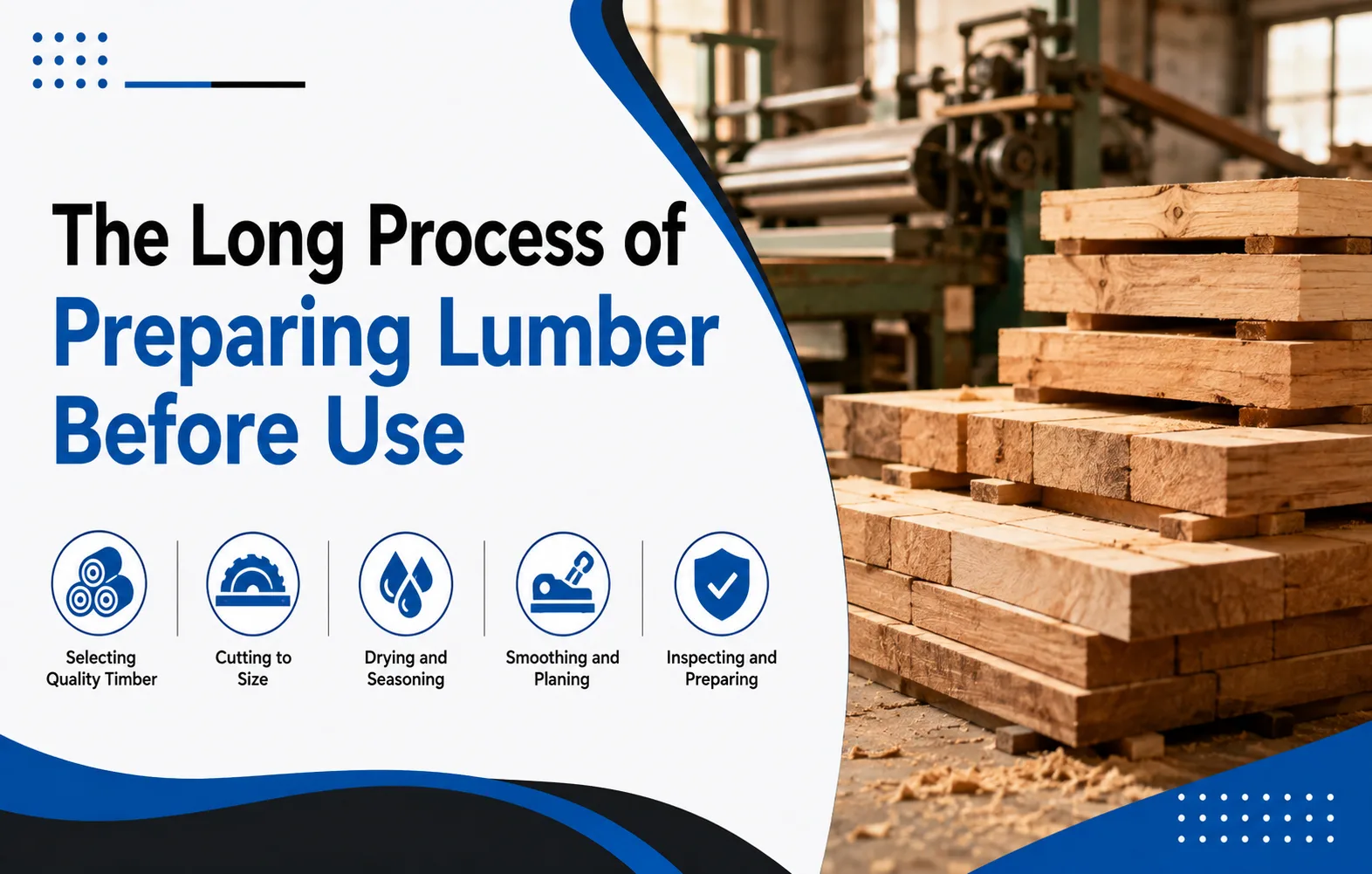
The Long Process of Preparing Lumber Before Use

Lumber may appear ready for use upon delivery to a job site, but quality wood goes through many preparation stages before it is used in a build. From the choice of which trees to cut down to drying, grading, cutting, and finishing, each stage plays a role in the strength, appearance, and performance of the final product. Also proper lumber preparation helps contractors to reduce material waste and to keep project budgets on track.

Selecting the Right Lumber

Lumber for a project is chosen based on what is required structurally and for design. What we see from contractors is they look at wood species, dimensions, moisture content, strength, and what the wood is for in the project. For structural framing, flooring, roofing, cabinets and outdoor work different grades and types of lumber are used.

Careful choice is key which if you go wrong with what you choose will cause waste, replacement costs and construction delays.

Debarking and Initial Processing

Raw logs often go through a process of debarking which is done before they are transformed into useful boards. The bark is removed which in turn brings out the wood which is also what makes for easier processing. Also at this stage we look over each log for defects like knots, cracks, decay and insect damage.

After review we find that logs are arranged for cutting by their size and quality. We see that efficient processing is what is done in order to maximize the use of each log.

Sawing and Sizing

Logs are turned into boards by sawing. What also changes is the grain pattern, dimensions and stability of the lumber which we get after sawing. After sawing we do truing and cut boards out to near finished sizes.

At present we require precise measurements. As professionals in construction we need dimensional accuracy of the lumber which in turn corresponds with project drawings and specs. Also at this stage quantity takeoffs may prove to be useful in determining the amount of usable material required for the project.

Drying and Seasoning

Fresh out of the mill wood has high moisture content which in turn usually requires it to be dried out before use. We may air dry or kiln dry the wood based on the requirement of the project at hand and the needed moisture level.

Proper drying out reduces what of excessive shrinkage, warp, split and other issues at time of install. Kiln drying also gives you more control over moisture content which in turn may reduce the incidence of certain pest and fungal issues.

Grading and Quality Inspection

Once lumber has gone through the drying process it is sorted by factors like strength, appearance, knots, splits, and also other defects. Structural lumber has to meet the right criteria for its intended use.

Quality control during the inspection process allows contractors to determine which boards are best for structural use and which are better left for non-structural applications. Through proper grading we see an improvement in reliability also we are able to prevent the use of improper materials in critical construction elements.

Planing and Finishing

Lumber is also planed to produce smoother and more uniform surfaces. As per the project requirements at times we may also do sanding, edge work, treatment, or apply protective finish.

In the case of outdoor use, treated wood is used for better performance against moisture, insects and decay. What the finishing will be is based on where and how the lumber will be used.

The Role of Accurate Estimating

In many cases preparing lumber is just the first step in a successful construction project. Also at the start of any project contractors must determine what materials are needed and the related costs. Professional Lumber Takeoff Services are available which from construction drawings and specs can do the estimation of the required amount of lumber.

Also in that regard Professional Quantity Take off Services which do for the most part deal with the issue of material quantities across many types of construction projects. When put together with reliable construction estimating services these tools may support improved budgeting, purchasing, scheduling and project planning.

Accurate cut lists also reduce over ordering and minimize material waste which is especially true when lumber prices and project costs are fluctuating.

Conclusion

Lumber preparation is a complex process which takes raw timber and turns it into reliable construction material. We see in this process that they select, saw, dry, grade, size and finish the wood which in turn produces quality in the end product. Also at the same time exact material estimation is done so that contractors buy what they need and not over or under which in turn reduces waste.

For contractors and builders that require reliable material planning, we at Construction Estimate Help provide support for your projects which has professional estimating and takeoff solutions to improve cost control and construction efficiency.

Frequently Asked Questions

Why do we dry lumber before construction?

Drying out which removes excess moisture also helps to reduce shrinking, warping, cracking and other dimensional changes post installation.

What is Lumber Takeoff?

Lumber Calculations for projects include determining what types of wood, what dimensions, and how much of it is needed based on the drawings, designs and details provided.

What do Quantity Takeoff Services do for contractors?

They present in depth on material requirements which in turn helps contractors with purchase planning, control of waste, budget preparation, and improved project estimates.

What is the scope of construction estimating?

In many projects we see that construction estimating services include material quantity calculations, labor and equipment estimates, cost analysis, and total project cost forecasting.

Does precise lumber estimation lower waste in construction?

Yes. More precise calculations of quantity will see contractors avoid unnecessary purchases and also identify material needs before the order process begins.