
WhatsApp
Hi there 👋
Request Free Estimate

Our experts can help you!
constructionestimatehelp.au@gmail.com
+1 (240) 8399485

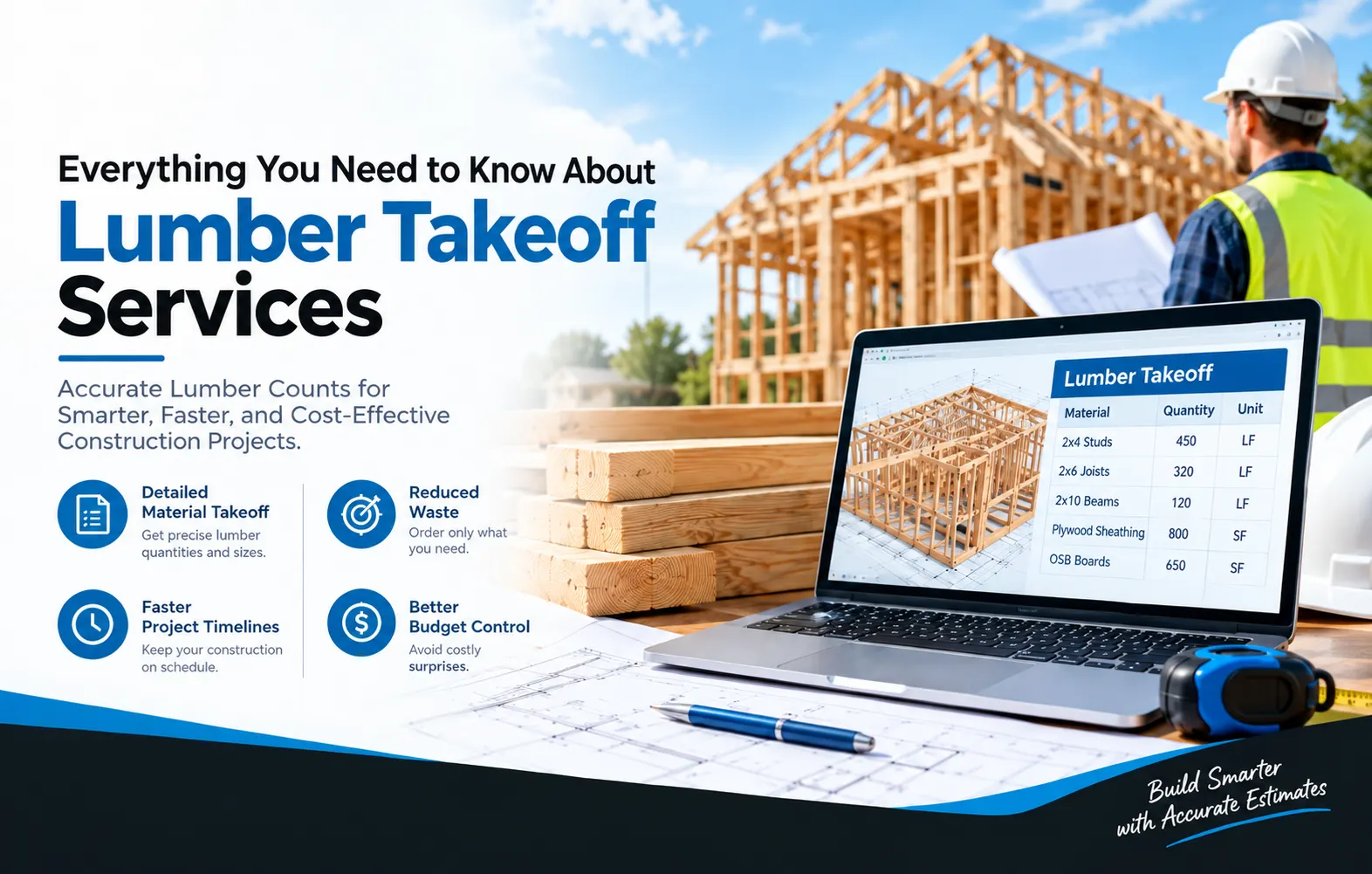
Everything You Need to Know About Lumber Takeoff Services

Accurate amounts of materials are key to controlling construction costs cutting waste and creating bids. Lumber Takeoff Services help contractors, builders, estimators and project managers determine the amount of wood materials required for a construction project. From framing lumber and sheathing to beams, joists and studs a detailed takeoff provides a material list before purchasing begins.

I find that for commercial projects professional Quantity Takeoff Services can make estimating faster and more organized. When combined with construction estimating services lumber takeoffs help construction professionals make better budgeting and procurement decisions.

What Are Lumber Takeoff Services?

Lumber Takeoff Services involve reviewing construction drawings, specifications and project documents to calculate the quantity and type of lumber needed.

A typical lumber takeoff may include:

– Wall studs and plates

– Floor joists

– Roof rafters and trusses

– Beams and posts

– Plywood and OSB sheathing

– Headers and blocking

– lumber

– Engineered wood products

The final takeoff generally provides material descriptions, sizes, quantities and other relevant measurements needed

measurements needed for estimating and purchasing.


Read More: A Complete Guide to Lumber Takeoff Services


Why Is a Lumber Takeoff Important?

1. Improves Material Accuracy

I see that a detailed takeoff reduces the possibility of ordering much or too little material. Accurate quantities can help contractors avoid expenses and project delays.

2. Supports Better Cost Estimation

I believe that material quantities form a part of a construction budget. A reliable takeoff allows estimators to apply material prices and calculate more realistic project costs.

3. Reduces Material Waste

I notice that overestimating lumber can result in inventory while underestimating can lead to additional orders and delivery delays. Proper quantity calculations help maintain material control.

4. Helps Contractors Prepare Bids

I think accurate material information enables contractors to prepare bids based on measurable project requirements rather than assumptions.

How Does a Lumber Takeoff Work?

I observe that the process usually begins with reviewing structural and engineering drawings. An estimator identifies lumber‑related components. Calculates their dimensions and quantities.

I understand that for example if a project requires 2×4 wall studs the estimator considers wall lengths, spacing, openings and other framing requirements to determine the estimated quantity.

I see that the calculated quantities can then be organized into a material schedule for pricing and procurement.

Lumber Takeoff vs. Other Quantity Takeoffs

I note that Quantity Takeoff Services cover more than lumber. Depending on the project takeoffs may include concrete, masonry, drywall, roofing, electrical, plumbing and other construction materials.

I see that a lumber takeoff specifically focuses on wood‑related materials. For example a drywall estimate may calculate board quantities whereas a lumber takeoff focuses on framing members and wood products.

I find that it is also important not to confuse lumber estimating with a plumbers pricing guide. A plumbers pricing guide is generally used to understand plumbing labor, materials or service pricing while lumber takeoffs focus on wood material quantities.

Where Can Contractors Use Lumber Takeoff Services?

I observe that lumber takeoffs are useful for projects across Australia, the USA, Canada and other construction markets including houses, commercial buildings, renovations, additions and framing projects.

I think that for contractors searching for construction estimating services in Australia lumber estimating services in the USA or takeoff support for local building projects outsourced estimating can provide additional capacity without requiring an in‑house estimating team.

How ConstructionEstimateHelp Can Help

I see that ConstructionEstimateHelp provides estimating support designed to help contractors and construction professionals organize project quantities and costs effectively. Professional takeoff assistance can be particularly useful when project drawings are detailed deadlines are short or multiple bids need to be prepared

I think accurate Lumber Takeoff Services can help transform construction drawings into material information that supports budgeting, purchasing and bidding decisions.

Frequently Asked Questions

What does a lumber takeoff include?

I note that a lumber takeoff can include studs, joists, rafters, beams, posts, plates, sheathing, blocking and other wood materials shown in project drawings.

How accurate are lumber takeoffs?

I believe that accuracy depends on the quality of drawings, project specifications, measurements and estimating methodology. Clear and complete construction documents generally support reliable results.

Can lumber takeoffs help reduce construction costs?

I think yes. By identifying required quantities accurately takeoffs can reduce unnecessary material purchases improve budgeting and minimize material waste.

Who needs lumber takeoff services?

I see that general contractors, subcontractors, builders, developers, remodelers, suppliers and construction estimators can benefit from lumber takeoff support.

Are lumber takeoffs, for bidding?

I think yes. A detailed material quantity list provides contractors with information needed to calculate material costs. Prepare more informed project bids.

Final Thoughts

I have seen how a reliable lumber takeoff changes the game by giving a base, for construction estimating, procurement and bidding. By spotting the wood materials that are needed and the amounts that are required contractors can keep cost control tight reduce waste and make better project decisions. When professional Quantity Takeoff Services are joined with construction estimating services construction teams can face projects with greater confidence.
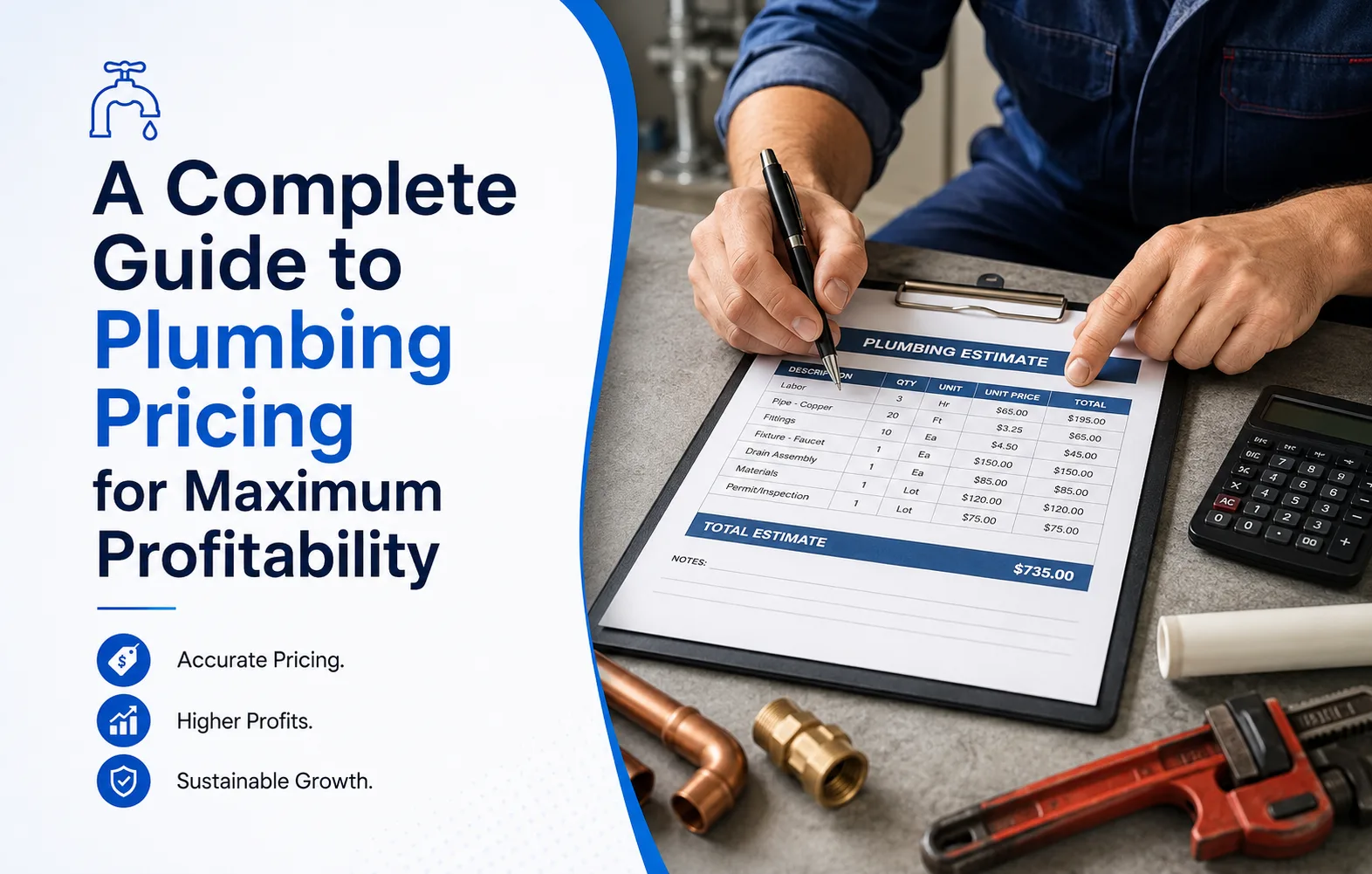
A Complete Guide to Plumbing Pricing for Maximum Profitability

Pricing is one of the most critical aspects of running a successful plumbing business. Accurate pricing not only ensures profitability but also helps contractors remain competitive in the market. Whether you are a residential plumber, commercial contractor, or builder, understanding the various factors that influence plumbing costs is essential. This comprehensive guide explores effective pricing strategies and explains how professional estimating solutions from Construction Estimate Help can improve profitability.

Understanding a Plumbers Pricing Guide

A well-structured plumbers pricing guide serves as a roadmap for determining labor, material, overhead, and profit margins for every project. Without a clear pricing strategy, contractors may underbid projects and suffer financial losses or overprice services and lose potential clients.

A plumbing pricing guide should include:

  • Labor costs
  • Material expenses
  • Equipment charges
  • Permit fees
  • Overhead expenses
  • Desired profit margins

Regularly updating your pricing guide according to market fluctuations ensures that your estimates remain accurate and profitable.

The Benefits of Flat Rate Plumbing Prices

Many plumbing businesses are shifting toward flat rate plumbing prices rather than charging by the hour. Flat-rate pricing provides customers with transparent costs before work begins, reducing disputes and increasing customer trust.

Advantages of flat-rate pricing include:

Improved Customer Satisfaction

Clients appreciate knowing the exact cost upfront without worrying about unexpected hourly charges.

Increased Revenue Opportunities

Flat-rate systems often allow contractors to include overhead and profit margins more effectively.

Simplified Billing Process

Invoices become easier to generate, and customers can make faster decisions regarding project approval.

However, establishing accurate flat-rate pricing requires careful analysis of labor productivity, material costs, and project complexity.

Factors Affecting Plumbing Installation Cost

The plumbing installation cost varies significantly depending on project scope and several influencing factors.

Project Size

Larger residential and commercial buildings require more materials and labor, increasing overall costs.

Type of Plumbing System

Installing advanced plumbing systems, such as smart water management or energy-efficient fixtures, may require specialized expertise and higher installation expenses.

Material Selection

Copper piping, PEX systems, and PVC materials differ substantially in cost. Premium materials naturally increase total project pricing.

Accessibility

Projects involving difficult access areas, remodeling work, or underground installations often require additional labor hours.

Contractors should carefully assess these factors when preparing estimates to avoid budget overruns.

Calculating Plumbing Cost Per Square Foot

One common method used by estimators is determining the plumbing cost per square foot. This approach provides a quick budgeting framework during the early planning stages.

The plumbing cost per square foot typically depends on:

  • Building type (residential, commercial, industrial)
  • Number of bathrooms and fixtures
  • Plumbing complexity
  • Local labor rates
  • Material specifications

Although square-foot pricing offers a preliminary estimate, detailed quantity takeoffs are necessary for accurate project budgeting.

How to Estimate Plumbing Cost for New Construction

Knowing how to estimate plumbing cost new construction projects accurately is essential for winning bids while maintaining profitability.

Key steps include:

Review Construction Drawings

Carefully analyze architectural and plumbing plans to identify all fixtures, piping systems, and equipment requirements.

Perform Quantity Takeoffs

Measure pipe lengths, fixture quantities, fittings, valves, and accessories to determine material requirements.

Calculate Labor Requirements

Estimate labor hours based on project complexity, crew productivity, and local wage rates.

Include Indirect Costs

Account for permits, insurance, transportation, supervision, and contingency allowances.

Add Profit Margins

Always include reasonable profit percentages to ensure sustainable business growth.

Why Choose Construction Estimating Services?

Professional construction estimating services can significantly improve estimate accuracy and business profitability. Estimating experts use advanced software, industry databases, and extensive experience to prepare detailed cost analyses.

Construction Estimate Help provides reliable estimating services that help contractors:

  • Reduce estimating errors
  • Submit competitive bids
  • Save valuable time
  • Improve project profitability
  • Minimize financial risks

By outsourcing estimating tasks, plumbing contractors can focus on project execution and customer satisfaction while ensuring accurate project pricing.

Conclusion

Developing an effective pricing strategy is essential for long-term success in the plumbing industry. A comprehensive plumbers pricing guide, accurate flat rate plumbing prices, and detailed cost estimation processes enable contractors to maximize profitability. Leveraging professional construction estimating services from Construction Estimate Help ensures precise estimates, competitive bids, and sustainable business growth.

Frequently Asked Questions (FAQs)

Q1. What is a plumbers pricing guide?

A plumbers pricing guide is a structured document that outlines labor rates, material costs, overhead expenses, and profit margins for plumbing projects.

Q2. Why are flat rate plumbing prices beneficial?

Flat-rate pricing provides cost transparency, simplifies billing, and improves customer satisfaction.

Q3. How is plumbing cost per square foot calculated?

Plumbing cost per square foot is calculated based on building size, fixture quantity, labor rates, and material specifications.

Q4. How do I estimate plumbing cost for new construction?

Review plans, perform quantity takeoffs, calculate labor costs, include indirect expenses, and add profit margins.

Q5. Why should I use professional construction estimating services?

Professional construction estimating services improve accuracy, save time, reduce errors, and help contractors submit more competitive bids.