
WhatsApp
Hi there 👋
Request Free Estimate

Our experts can help you!
constructionestimatehelp.au@gmail.com
+1 (240) 8399485

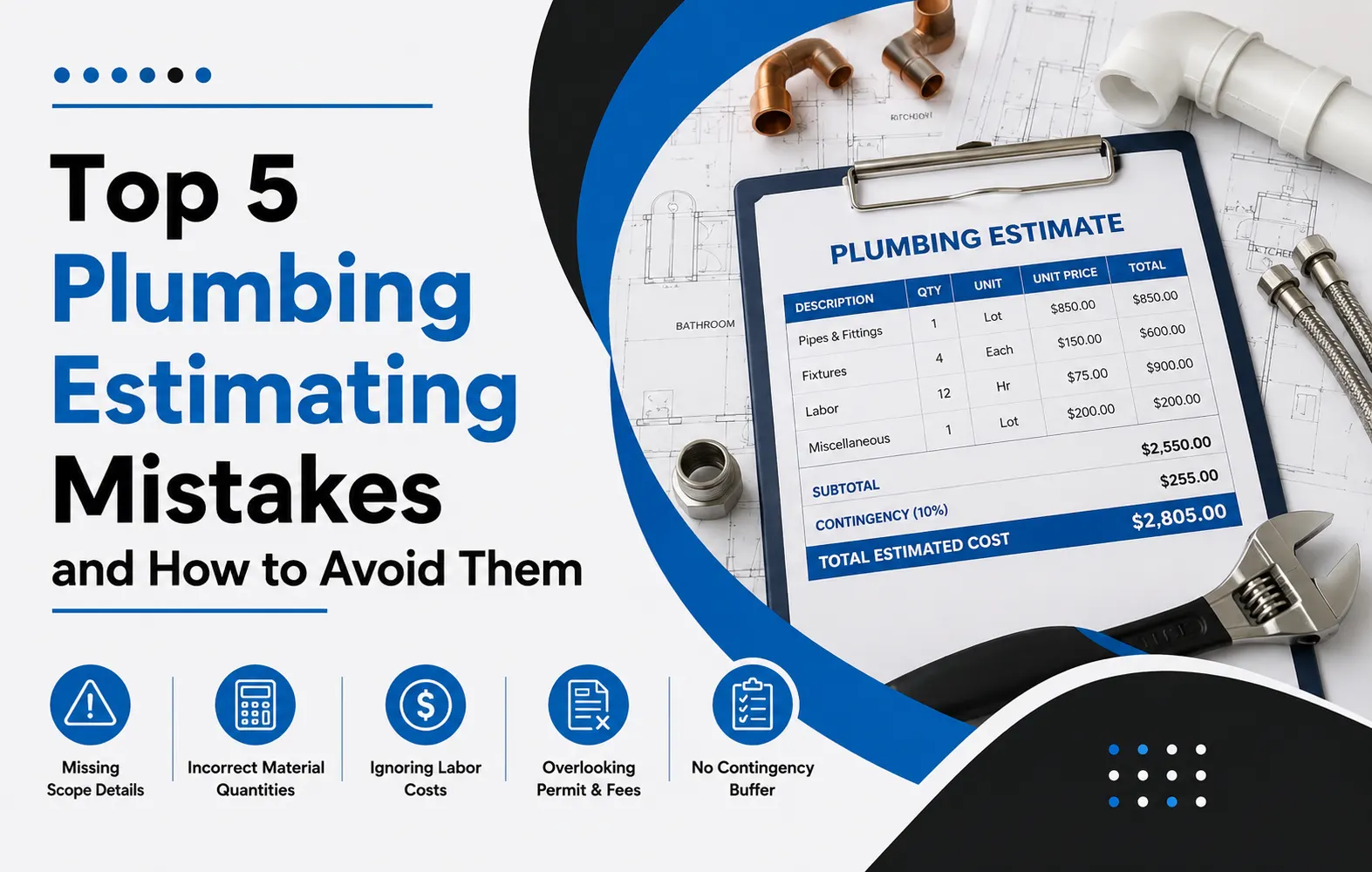
Top 5 Plumbing Estimating Mistakes and How to Avoid Them

Accurate plumbing estimates are essential for keeping construction projects on schedule and within budget. Whether you’re a contractor, builder, or subcontractor, even a small estimating error can lead to unexpected expenses, project delays, and reduced profits. Understanding the most common estimating mistakes helps you prepare better bids and deliver successful projects.

Using a reliable new construction plumbing cost estimator and partnering with an experienced construction estimating company can significantly improve estimate accuracy. In this guide, we’ll discuss the top five plumbing estimating mistakes and practical ways to avoid them.

1. Incomplete Review of Project Drawings

One of the biggest estimating mistakes is failing to carefully review architectural, mechanical, and plumbing drawings before preparing an estimate.

Many estimators overlook:

  • Fixture schedules
  • Pipe routing changes
  • Specialty plumbing equipment
  • Underground plumbing requirements

Missing these details often leads to underestimated material quantities and labor costs.

How to Avoid It

Review every project document thoroughly before starting the estimate. Cross-check plumbing plans with structural and architectural drawings to identify conflicts or missing information. Professional estimators use digital takeoff software to reduce the chances of missing important details.

2. Underestimating Material Costs

Material prices frequently change due to market conditions, supply chain disruptions, and regional availability. Using outdated pricing can create major budget overruns.

This directly impacts the overall plumbing installation cost, especially on large commercial or residential projects.

How to Avoid It

  • Update material pricing regularly.
  • Use current supplier quotes.
  • Include a reasonable contingency for price fluctuations.
  • Verify specialty fixtures and equipment costs before submitting bids.

Working with an experienced construction estimating company ensures your estimates reflect current market pricing.

3. Ignoring Labor Productivity Factors

Many estimates assume ideal working conditions. However, actual labor productivity depends on several factors, including:

  • Site accessibility
  • Weather conditions
  • Project complexity
  • Coordination with other trades
  • Crew experience

Ignoring these variables often results in underestimated labor expenses and inaccurate plumbing services cost calculations.

How to Avoid It

Use historical project data to calculate realistic labor hours. Adjust productivity rates based on project type and site conditions rather than relying on generic assumptions.

4. Forgetting Indirect Costs

Many contractors focus only on labor and materials while forgetting indirect project expenses.

Common overlooked costs include:

  • Equipment rental
  • Temporary utilities
  • Permits
  • Insurance
  • Supervision
  • Waste disposal
  • Transportation

These hidden expenses can significantly increase the total plumbing cost estimator calculation.

How to Avoid It

Create a standardized estimating checklist that includes all direct and indirect costs before finalizing every proposal. Reviewing previous completed projects can also help identify commonly missed expenses.

5. Relying on Manual Calculations

Manual estimating using spreadsheets increases the risk of:

  • Quantity errors
  • Formula mistakes
  • Duplicate items
  • Missing materials
  • Incorrect labor calculations

Even experienced estimators can make costly mistakes when calculations are performed manually.

How to Avoid It

Invest in modern estimating software or outsource estimating tasks to professionals. A dependable new construction plumbing cost estimator uses advanced digital tools to improve quantity takeoffs and pricing accuracy while reducing human error.

Why Professional Plumbing Estimating Matters

Professional estimating helps contractors submit competitive bids without sacrificing profitability. Accurate estimates improve project planning, reduce financial risk, and increase client confidence.

Construction Estimate Help provides reliable estimating solutions for residential, commercial, and industrial plumbing projects. Their experienced team delivers precise quantity takeoffs, updated pricing, and detailed cost breakdowns to help contractors win more bids while maintaining healthy profit margins.

Whether you’re estimating a small residential installation or a large commercial development, partnering with a trusted construction estimating company can save both time and money.

Final Thoughts

Accurate plumbing estimates require more than simply calculating pipes and fixtures. Careful drawing reviews, updated pricing, realistic labor calculations, inclusion of indirect costs, and modern estimating tools all contribute to successful project budgeting.

Avoiding these common mistakes will improve estimating accuracy, reduce costly surprises, and help your business remain competitive. With expert support from Construction Estimate Help, contractors can prepare dependable estimates that support profitable and efficient construction projects.

Frequently Asked Questions (FAQ)

1. What does a new construction plumbing cost estimator do?

A new construction plumbing cost estimator calculates labor, material, equipment, and installation costs for new plumbing systems, helping contractors prepare accurate project bids.

2. Why is plumbing installation cost estimation important?

Accurate plumbing installation cost estimation prevents budget overruns, improves bid accuracy, and helps contractors maintain profitability throughout the project.

3. How can a construction estimating company improve estimate accuracy?

A professional construction estimating company uses experienced estimators, advanced software, updated pricing databases, and detailed takeoff methods to deliver highly accurate estimates.

4. What factors affect plumbing services cost?

Several factors influence plumbing services cost, including project size, labor rates, material prices, fixture selection, site conditions, permit fees, and installation complexity.

5. How can I reduce errors in plumbing cost estimates?

Using modern estimating software, reviewing project drawings carefully, updating material prices regularly, accounting for indirect costs, and working with experienced estimating professionals can greatly improve the accuracy of any plumbing cost estimator.
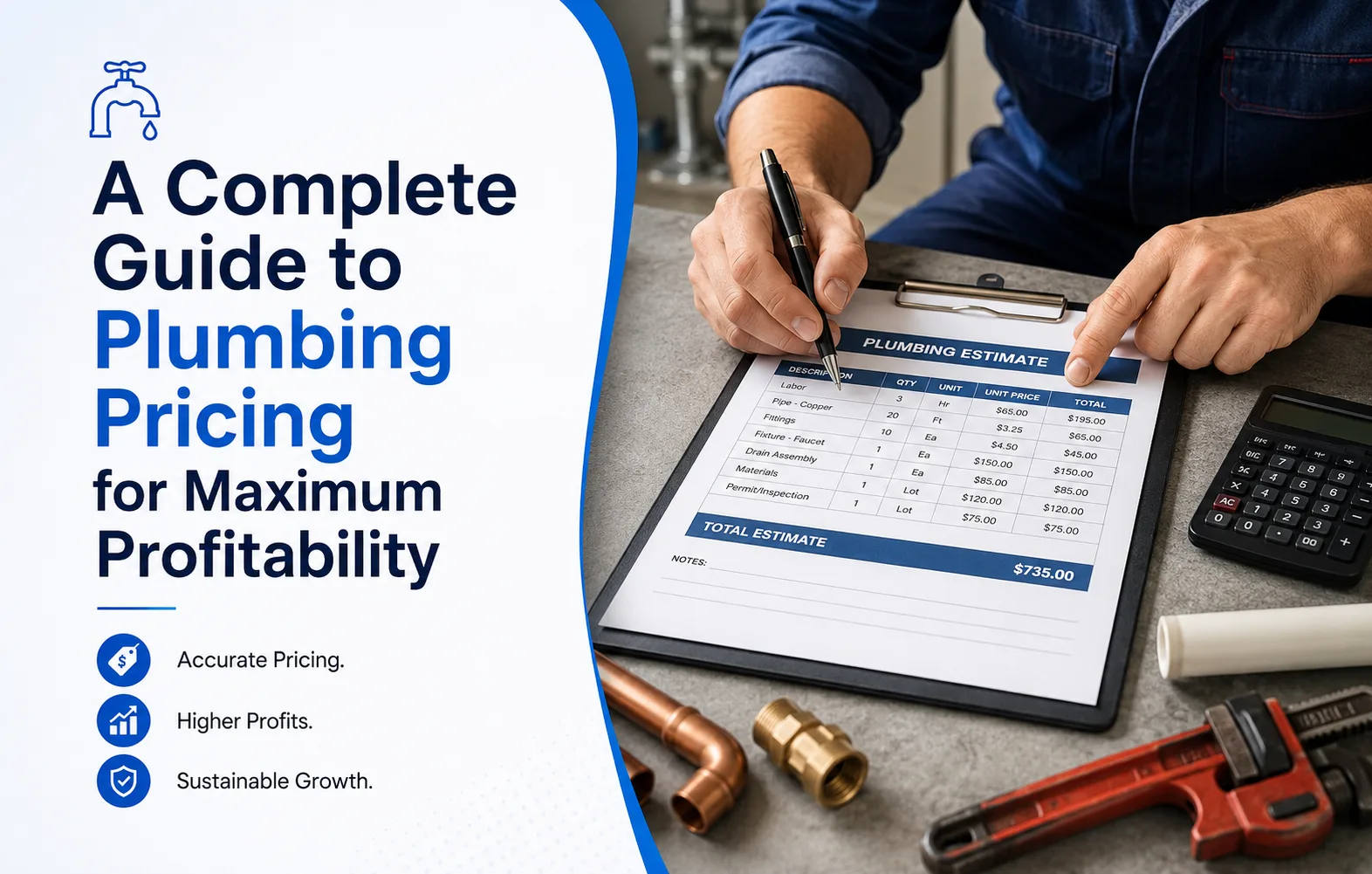
A Complete Guide to Plumbing Pricing for Maximum Profitability

Pricing is one of the most critical aspects of running a successful plumbing business. Accurate pricing not only ensures profitability but also helps contractors remain competitive in the market. Whether you are a residential plumber, commercial contractor, or builder, understanding the various factors that influence plumbing costs is essential. This comprehensive guide explores effective pricing strategies and explains how professional estimating solutions from Construction Estimate Help can improve profitability.

Understanding a Plumbers Pricing Guide

A well-structured plumbers pricing guide serves as a roadmap for determining labor, material, overhead, and profit margins for every project. Without a clear pricing strategy, contractors may underbid projects and suffer financial losses or overprice services and lose potential clients.

A plumbing pricing guide should include:

  • Labor costs
  • Material expenses
  • Equipment charges
  • Permit fees
  • Overhead expenses
  • Desired profit margins

Regularly updating your pricing guide according to market fluctuations ensures that your estimates remain accurate and profitable.

The Benefits of Flat Rate Plumbing Prices

Many plumbing businesses are shifting toward flat rate plumbing prices rather than charging by the hour. Flat-rate pricing provides customers with transparent costs before work begins, reducing disputes and increasing customer trust.

Advantages of flat-rate pricing include:

Improved Customer Satisfaction

Clients appreciate knowing the exact cost upfront without worrying about unexpected hourly charges.

Increased Revenue Opportunities

Flat-rate systems often allow contractors to include overhead and profit margins more effectively.

Simplified Billing Process

Invoices become easier to generate, and customers can make faster decisions regarding project approval.

However, establishing accurate flat-rate pricing requires careful analysis of labor productivity, material costs, and project complexity.

Factors Affecting Plumbing Installation Cost

The plumbing installation cost varies significantly depending on project scope and several influencing factors.

Project Size

Larger residential and commercial buildings require more materials and labor, increasing overall costs.

Type of Plumbing System

Installing advanced plumbing systems, such as smart water management or energy-efficient fixtures, may require specialized expertise and higher installation expenses.

Material Selection

Copper piping, PEX systems, and PVC materials differ substantially in cost. Premium materials naturally increase total project pricing.

Accessibility

Projects involving difficult access areas, remodeling work, or underground installations often require additional labor hours.

Contractors should carefully assess these factors when preparing estimates to avoid budget overruns.

Calculating Plumbing Cost Per Square Foot

One common method used by estimators is determining the plumbing cost per square foot. This approach provides a quick budgeting framework during the early planning stages.

The plumbing cost per square foot typically depends on:

  • Building type (residential, commercial, industrial)
  • Number of bathrooms and fixtures
  • Plumbing complexity
  • Local labor rates
  • Material specifications

Although square-foot pricing offers a preliminary estimate, detailed quantity takeoffs are necessary for accurate project budgeting.

How to Estimate Plumbing Cost for New Construction

Knowing how to estimate plumbing cost new construction projects accurately is essential for winning bids while maintaining profitability.

Key steps include:

Review Construction Drawings

Carefully analyze architectural and plumbing plans to identify all fixtures, piping systems, and equipment requirements.

Perform Quantity Takeoffs

Measure pipe lengths, fixture quantities, fittings, valves, and accessories to determine material requirements.

Calculate Labor Requirements

Estimate labor hours based on project complexity, crew productivity, and local wage rates.

Include Indirect Costs

Account for permits, insurance, transportation, supervision, and contingency allowances.

Add Profit Margins

Always include reasonable profit percentages to ensure sustainable business growth.

Why Choose Construction Estimating Services?

Professional construction estimating services can significantly improve estimate accuracy and business profitability. Estimating experts use advanced software, industry databases, and extensive experience to prepare detailed cost analyses.

Construction Estimate Help provides reliable estimating services that help contractors:

  • Reduce estimating errors
  • Submit competitive bids
  • Save valuable time
  • Improve project profitability
  • Minimize financial risks

By outsourcing estimating tasks, plumbing contractors can focus on project execution and customer satisfaction while ensuring accurate project pricing.

Conclusion

Developing an effective pricing strategy is essential for long-term success in the plumbing industry. A comprehensive plumbers pricing guide, accurate flat rate plumbing prices, and detailed cost estimation processes enable contractors to maximize profitability. Leveraging professional construction estimating services from Construction Estimate Help ensures precise estimates, competitive bids, and sustainable business growth.

Frequently Asked Questions (FAQs)

Q1. What is a plumbers pricing guide?

A plumbers pricing guide is a structured document that outlines labor rates, material costs, overhead expenses, and profit margins for plumbing projects.

Q2. Why are flat rate plumbing prices beneficial?

Flat-rate pricing provides cost transparency, simplifies billing, and improves customer satisfaction.

Q3. How is plumbing cost per square foot calculated?

Plumbing cost per square foot is calculated based on building size, fixture quantity, labor rates, and material specifications.

Q4. How do I estimate plumbing cost for new construction?

Review plans, perform quantity takeoffs, calculate labor costs, include indirect expenses, and add profit margins.

Q5. Why should I use professional construction estimating services?

Professional construction estimating services improve accuracy, save time, reduce errors, and help contractors submit more competitive bids.