WhatsApp
Hi there 👋
Request Free Estimate

Our experts can help you!
constructionestimatehelp.au@gmail.com
+1 (240) 8399485

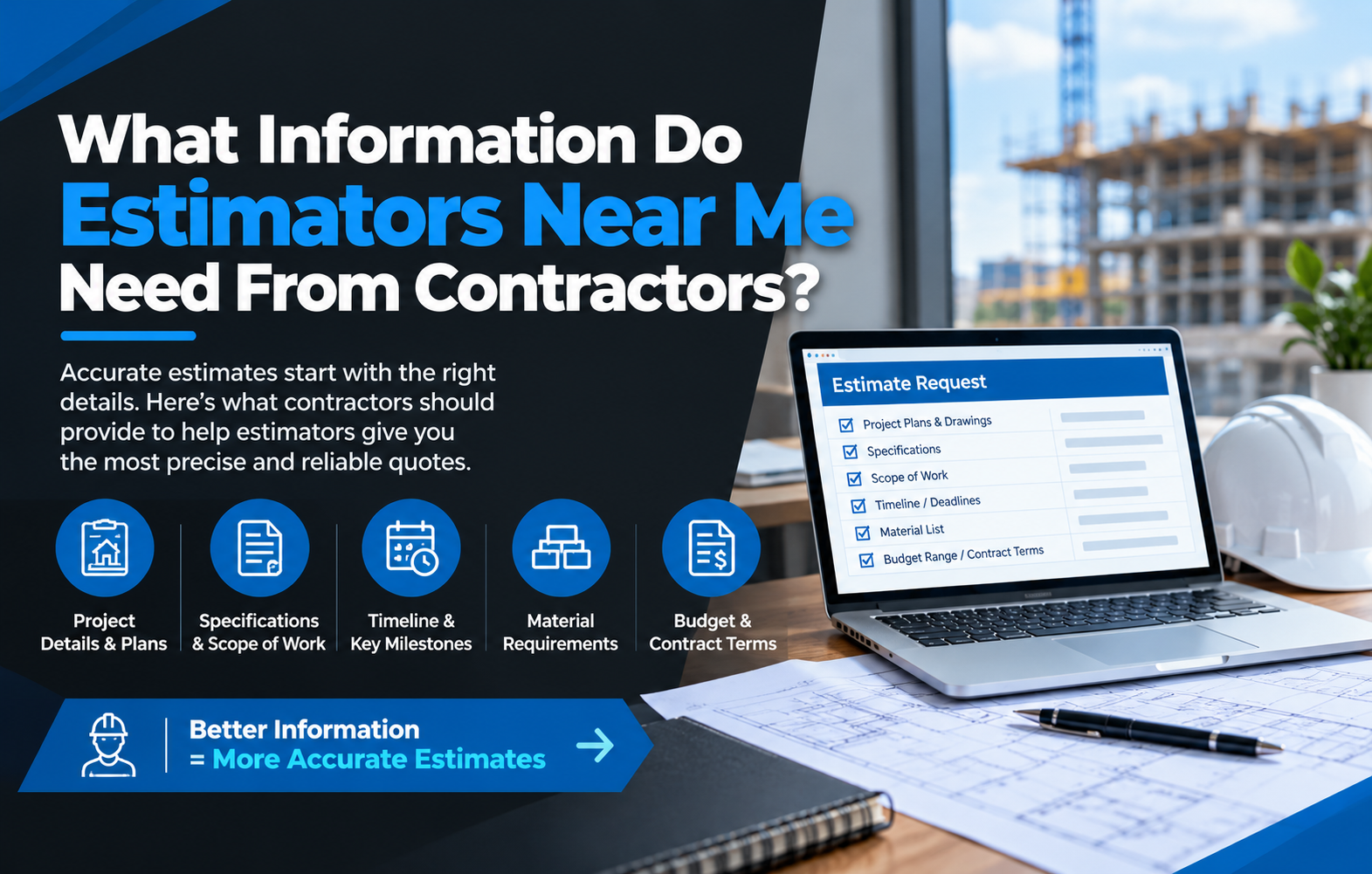
What Information Do Estimators Near Me Need From Contractors?

Accurate construction cost estimation depends on having reliable project information. Contractors often reach out to estimators near me when they need detailed material quantities, labor costs and overall project budgets.. Estimators can only create dependable estimates when contractors give them the right documents and project details.

Whether you are planning a renovation, a commercial building or a large construction project sharing organized information helps estimators understand the scope and produce a more useful estimate. ConstructionEstimateHelp works with project information to support contractors in planning costs and preparing bids.

1. Complete Project Plans and Drawings

The first and most important requirement is a set of project drawings. These may include architectural, structural, mechanical, electrical, plumbing and civil drawings.

Drawings help estimators identify dimensions, room layouts, construction elements, materials and installation requirements. Updated drawings are particularly important because estimating from plans can result in incorrect quantities or missing work.

Contractors should provide the available drawing set, including revisions and approved changes.

2. Project Scope of Work

A scope of work explains what needs to be completed. It helps estimators understand the projects boundaries and identify which trades and activities should be included.

The scope may cover demolition, excavation, foundations, framing, roofing, drywall, painting, flooring, plumbing, electrical work, landscaping and other construction activities.

When contractors provide a scope construction estimators near me can better determine the work included in the estimate and avoid unnecessary assumptions.

3. Material Specifications

Material specifications are another part of construction estimating. Contractors should provide information about specified materials whenever possible.

For example a project may require a grade of lumber, type of concrete, roofing system, insulation, flooring, windows, doors, fixtures or finishes.

Material specifications allow construction estimators to calculate quantities and apply pricing. If the plans allow material options contractors should indicate their preferred choice or request separate pricing scenarios.

4. Project Location

Location can significantly affect construction costs. Contractors should provide the projects city, state or other relevant location details.

Local labor rates, material availability, transportation expenses, taxes, permit requirements and site conditions can vary between locations. Providing a project location allows the estimating process to account for relevant regional cost factors.

This is particularly useful when contractors search for estimators near me because local project conditions may influence the estimate.

5. Quantity and Measurement Information

When available contractors can provide existing quantity takeoffs, measurements, schedules or other project calculations. These documents can serve as supporting information during the estimating process.

However professional estimators generally review the drawings and specifications rather than relying solely on contractor-provided quantities. Cross-checking quantities can help identify discrepancies before bidding or purchasing begins.

Measurements for areas, lengths, volumes and counts can be especially important for materials such as concrete, drywall, flooring, lumber, roofing and finishes.

6. Labor and Installation Requirements

Construction estimates may include both material and labor components. Contractors should communicate any installation requirements, productivity expectations or labor-related information that could affect pricing.

For example difficult site access, unusual installation methods, complex architectural details or specialized labor requirements may influence the estimated cost.

Providing these details helps estimators develop a realistic breakdown instead of treating every installation as a standard task.

7. Site Conditions and Existing Structures

For renovation remodeling and extension projects existing conditions can have an impact on costs. Contractors should provide information about the structure, demolition requirements, accessibility, utilities and known site restrictions.

Photographs, site measurements, inspection reports and existing-condition drawings can also be useful.

The clearly the existing conditions are documented the easier it is for estimators to identify potential work that may otherwise be overlooked.

8. Project Schedule and Deadlines

Contractors should also provide project dates, including bid deadlines expected start dates and completion targets.

A tight construction schedule may require planning assumptions than a project with a flexible timeline. Procurement lead times can also affect material decisions.

Giving construction estimators the relevant deadlines allows the estimating workflow to be organized around the contractors bidding or planning requirements.

9. Bid Requirements and Inclusions

Every contractor may have bidding requirements. Contractors should clearly state what they expect to receive from the estimator.

For example an estimate may need sections for materials, labor, equipment, subcontractors, overhead and other costs. Some bids may also require trade- breakdowns or specific formatting.

Clearly defining these requirements helps ensure the final estimate is presented in a format that’s useful for bidding and project planning.

10. Changes, Addenda and Revisions

Construction projects frequently change during the design and bidding stages. Contractors should provide all addenda, revised drawings, updated specifications and change information.

Missing a revision can lead to quantities or omitted work. Therefore contractors should confirm that the estimator has received the project information before finalizing an estimate.


Read More: Drywall Estimator Near You – Quick and Trusted Project Cost Solutions


Why Complete Information Matters

Professional estimating is more than calculating material quantities. It involves interpreting project documents identifying construction activities applying cost information and organizing the results into a practical estimate.

When contractors provide project information estimators near me can spend more time analyzing the actual scope and less time making assumptions. This can support budgeting, bidding, procurement planning and project preparation.

For contractors who need assistance with quantity takeoffs and construction cost estimating ConstructionEstimateHelp can work with project drawings, specifications, scope details and other available documentation to develop estimating information.

Contractors should provide project drawings, specifications, scope of work, material requirements, location details, quantities, labor information, site conditions, schedules, bid requirements and all current revisions. These details give construction estimators near me the information needed to understand the project properly.

A organized information package can make the estimating process more efficient and help contractors receive a clearer picture of expected construction costs. Before sending a project, for estimating contractors should review their documents carefully. Make sure the latest information is included.



How to Choose the Right Waterproofing System for Your Property?

Waterproofing is a part of protecting any residential or commercial property from moisture, leaks, mold and structural damage. Choosing the Waterproofing System depends on factors such as the building type, climate, surface condition, water exposure and project budget. A planned waterproofing solution can reduce maintenance requirements and help extend the life of a building.

Understand Your Property’s Waterproofing Needs

The first step is to identify where moisture is likely to enter the property. Common problem areas include roofs, basements, bathrooms, balconies, foundations, walls and underground structures. Each area may require a waterproofing approach.

For example a basement exposed to groundwater may need a waterproof membrane or drainage solution while a bathroom may require a liquid-applied or cementitious waterproofing system. Understanding the source and level of water exposure helps contractors select materials and installation methods.

Compare Waterproofing Systems

There are several waterproofing options available for construction projects. Some common systems include:

  • Liquid waterproofing: Applied as a liquid coating that forms a protective membrane.
  • Sheet membranes: Pre-manufactured sheets installed over surfaces to create a water-resistant barrier.
  • Cementitious waterproofing: Cement-based products commonly used for surfaces, bathrooms and foundations.
  • Bituminous waterproofing: Often used for roofs, foundations and below-ground applications.
  • Polyurethane waterproofing:. Useful for surfaces that may experience movement or cracking.

The appropriate Waterproofing System should be selected according to the propertys requirements rather than simply choosing the least expensive option.

Consider Waterproofing Costs

Budget is another factor when planning waterproofing work. Waterproofing costs can vary depending on material prices, labor, surface preparation, project size, accessibility and the complexity of the installation.

A low initial price does not always mean overall costs. Poor-quality materials or inadequate preparation may lead to leaks and expensive repairs later. A detailed estimate can help property owners understand material quantities, labor requirements, equipment and other project expenses before construction begins.

Use Accurate Waterproofing Estimating Services

Accurate quantity and cost calculations can make waterproofing projects easier to plan. Professional Waterproofing Estimating Services can help contractors and builders calculate material quantities, labor requirements, waste allowances and projected project costs.

A detailed estimate may include membranes, coatings, primers, sealants, protection boards, drainage materials, labor, equipment and other required items. This information can support accurate bidding and project budgeting.

Work With a Construction Estimating Company

Working with a construction estimating company can be useful when a project involves multiple waterproofing areas or detailed construction plans. Experienced estimators can review drawings and specifications prepare quantity takeoffs and organize cost information for project planning.

For contractors accurate estimates can also support bids while reducing the possibility of material shortages or unexpected expenses.

Check Installation and Maintenance Requirements

the best waterproofing material can fail if it is installed incorrectly. Before choosing a system consider manufacturer requirements, surface preparation, curing time, application conditions and maintenance needs.

Property owners should also ask contractors about warranties, expected service life, inspection requirements and repair procedures. Regular inspections can help identify waterproofing problems before they become major structural issues.

Final Thoughts

Choosing the waterproofing solution requires more than comparing material prices. Property type, water exposure, surface condition, installation requirements, durability and budget should all be considered. Professional Waterproofing Estimating Services can provide an understanding of quantities and waterproofing costs helping contractors and property owners plan projects more effectively.

With estimating and the right Waterproofing System construction projects can achieve better moisture protection while maintaining better control over costs and resources.

FAQs

1. What is the best Waterproofing System, for a property?

The appropriate system depends on the location, surface, water exposure, climate and project requirements. Different areas may require waterproofing methods.

2. What factors affect waterproofing costs?

Material type, project size, labor, surface preparation, accessibility, application method and site conditions can all influence waterproofing costs.

3. Why are Waterproofing Estimating Services

They help calculate material quantities, labor requirements, waste and projected costs making budgeting and bidding more accurate.

4. Can a construction estimating company help with waterproofing projects?

Yes. A construction estimating company can prepare quantity takeoffs and cost estimates based on project drawings, specifications and scope of work.

5. How can waterproofing problems be prevented?

Selecting materials preparing surfaces correctly following installation specifications and carrying out regular inspections can help reduce waterproofing problems.

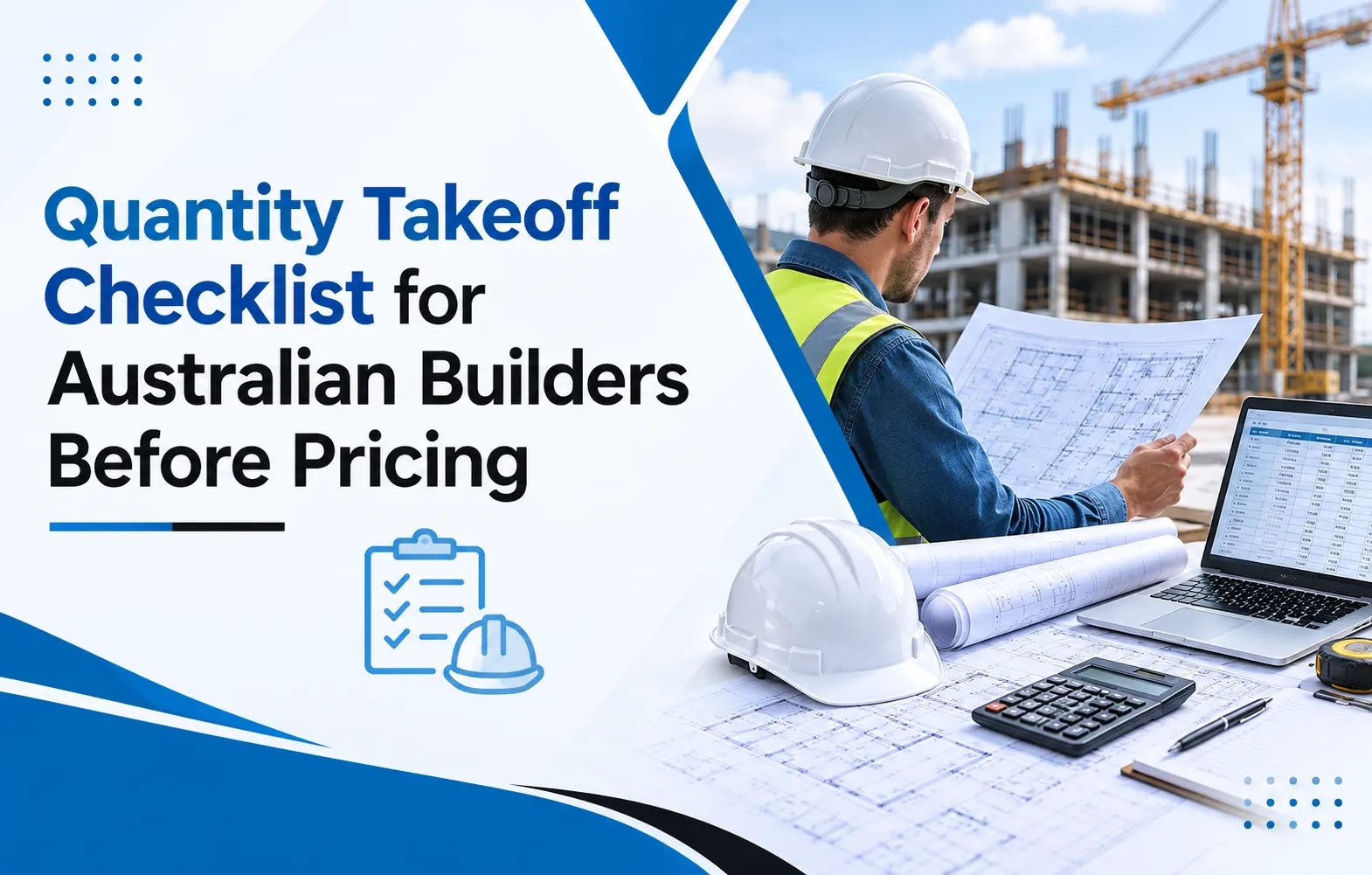
Quantity Takeoff Checklist for Australian Builders Before Pricing

Accurate pricing starts with an accurate quantity takeoff. Before preparing a quote or submitting a tender, Australian builders need to make sure every important material, measurement, and project detail has been reviewed. A well-prepared Quantity Takeoff Checklist can reduce estimating mistakes, improve cost control, and make the pricing process more reliable.

Whether you are working on a residential renovation, commercial development, or large construction project, using professional Quantity Takeoff Services can help you organize project quantities before final pricing.

What Should Be Included in a Quantity Takeoff Checklist?

A quantity takeoff checklist provides a structured way to review drawings, specifications, and project requirements. Before pricing a project, Australian builders should check the following areas.

1. Review the Latest Construction Drawings

Always confirm that you are working from the latest architectural, structural, civil, and services drawings. Check revision numbers and make sure superseded drawings have not been used.

Even a small drawing change can affect material quantities and project costs.

2. Check Project Specifications

Drawings provide dimensions and layouts, but specifications explain the required materials, finishes, grades, and installation standards. Review the specifications alongside the drawings to avoid missing important pricing requirements.

3. Measure Major Material Quantities

Break the project into individual trades and measure the required quantities. Depending on the project, this may include:

  • Concrete and reinforcement
  • Earthwork and excavation
  • Structural steel
  • Timber and framing
  • Roofing materials
  • Doors and windows
  • Flooring
  • Drywall and plasterboard
  • Painting
  • Electrical and plumbing components
  • Mechanical services

Organizing quantities by trade makes the final estimate easier to review.

4. Account for Waste and Allowances

Material waste should be considered where appropriate. Cutting, handling, transportation, site conditions, and installation methods can affect actual material requirements.

However, allowances should be based on reasonable project assumptions rather than arbitrary percentages.

5. Check Labour Requirements

A quantity takeoff is not only about materials. Builders should also consider the labour required to install each item. Labour productivity, site access, project complexity, and working conditions can influence the final cost.

This is where professional construction estimating services can provide additional support.

6. Identify Missing Information

Before pricing, create a list of unclear or missing information. For example, a drawing may not clearly identify a finish, specification, quantity, or installation requirement.

Clarifying these issues before submitting a quote can help reduce variations and unexpected costs later.

7. Cross-Check Quantities

Finally, compare quantities between drawings, schedules, specifications, and previous calculations. A second review can identify measurement errors, duplicated items, or missing scope.

When Should You Hire a Construction Estimator?

Builders who handle several projects at the same time may not always have enough time for detailed takeoffs. Searching for a construction estimator near me, estimators near me, or construction estimators near me can help builders find professional support for project quantity measurement and cost planning.

Similarly, businesses searching for construction estimating companies, an estimating company near me, or estimating services near me can consider professional estimating providers that understand construction drawings, material quantities, labour requirements, and project scope.

For Australian projects, Construction Estimate Help provides estimating and quantity takeoff support to help builders prepare more organized and informed project pricing.

Why Accurate Takeoffs Matter

An incomplete takeoff can result in underestimated material costs, missed trades, inaccurate labour calculations, and reduced profit margins. A detailed checklist creates a repeatable process that helps builders review the entire project scope before pricing.

Professional Quantity Takeoff Services can also save time when projects contain multiple drawings, detailed specifications, and numerous construction trades.

FAQ

What is a Quantity Takeoff Checklist?

A Quantity Takeoff Checklist is a structured list used to review drawings, specifications, materials, quantities, labour requirements, allowances, and other project details before preparing a construction estimate.

Why is quantity takeoff important for Australian builders?

Accurate quantity takeoffs help builders understand the project’s material and labour requirements before pricing. This can support more consistent estimates and reduce the risk of missing scope.

When should I use Quantity Takeoff Services?

Builders can use Quantity Takeoff Services when they need detailed measurements, have limited estimating resources, or are handling multiple tenders and construction projects simultaneously.

How can I find construction estimators near me?

You can search for terms such as construction estimator near me, estimators near me, or construction estimators near me to identify estimating providers serving your area. Always check their experience, service scope, and understanding of your project type.

What does Construction Estimate Help provide?

Construction Estimate Help supports builders and contractors with construction estimating and quantity takeoff requirements, helping them organize project quantities and prepare for pricing.

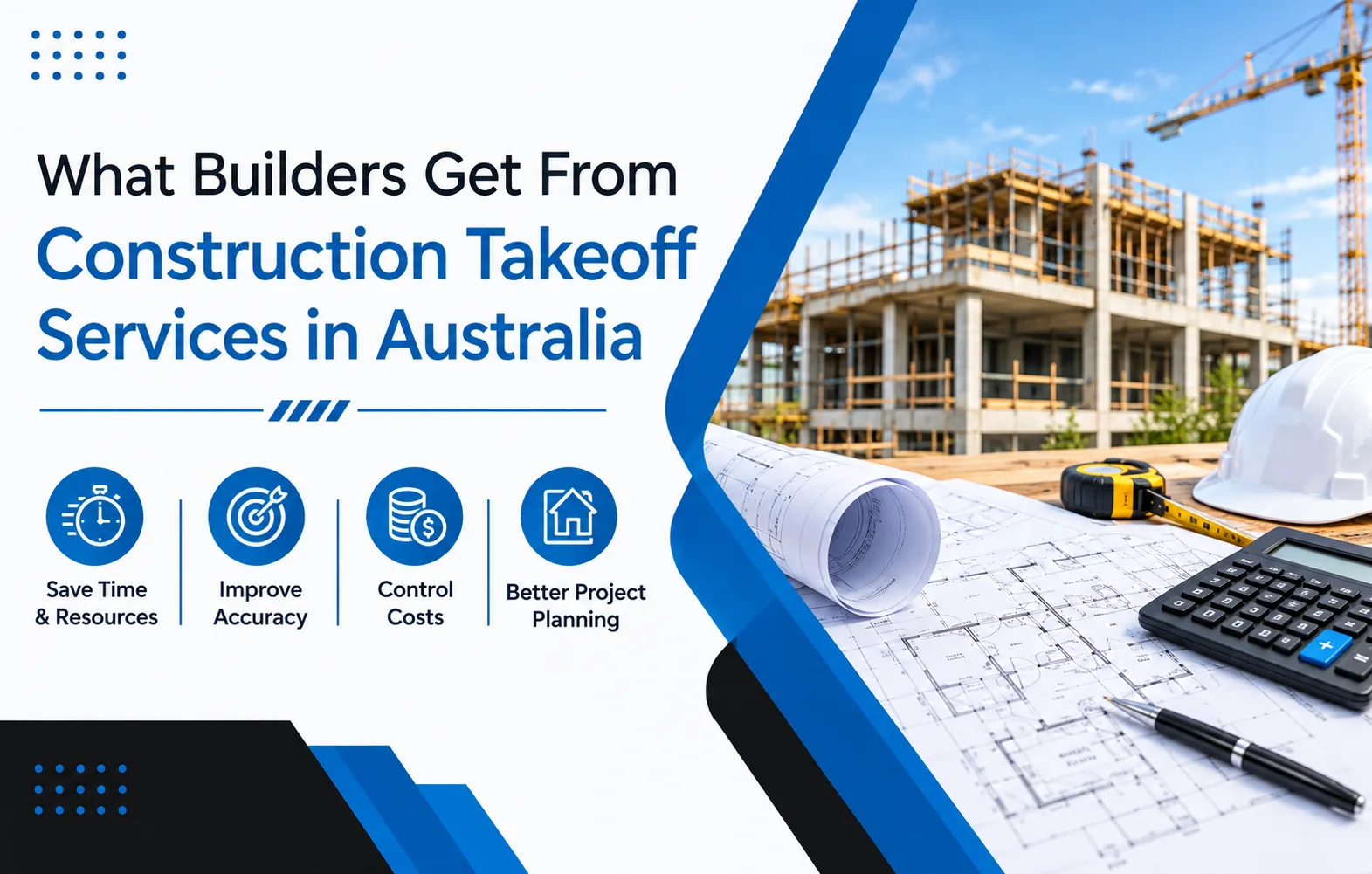
What Builders Get From Construction Takeoff Services in Australia

Construction projects in Australia need planning, accurate amounts of materials and clear money expectations before work starts. Even a small mistake in how much material’s needed can affect budgets getting supplies how many workers are needed and when the project will finish. This is where Construction Takeoff Services can help builders, contractors and people who work on the job get ready for projects with understanding.

Accurate Material Amounts

One of the advantages of expert takeoff services is a detailed list of the materials needed for a project. A takeoff can include concrete, wood, floors, walls, roofs, doors, windows, finishes and other parts of a building.

Of looking at drawings by hand and guessing how much is needed builders can get a clear list of materials based on the plans for the project. This makes buying materials and planning money and also helps stop extra materials from being wasted.

Better Money Planning

Exact amounts of materials are the base for estimates. Professional Quantity Takeoff Services can help builders match the amount of materials with prices how many workers are needed and other costs for the project.

A clear estimate helps contractors know how much a project might cost before they send in a bid. It can also make it easier to see which parts of the project cost a lot and look at ways to change the cost.

Faster Bid Making

Australian builders often have to get bids done quickly. Looking at lots of drawings and figuring out how much material is needed by hand takes a lot of time.

Hiring someone to do the takeoff work can give construction people a ready list of materials. This lets them spend time looking at what the project needs making bids talking to clients and handling other work.

Help with Buying Materials

A takeoff can also help with getting materials. When the amounts are clearly listed the people who buy materials can use that to plan orders and set up deliveries.

This can be very helpful for projects where getting too much material might cost more for storage and waste and getting too little might slow things down.

Less Mistakes in Estimates

Calculating by hand can lead to missing parts counting the thing twice or making wrong guesses. Expert help gives a way to look at drawings and the details of a project.

Builders who search online for a construction estimator near me estimating services near me or estimators near me can also think about companies that work from away and help with Australian building projects.

Good for Parts of Building

Takeoff services are not just for regular building projects. Depending on the company takeoffs can help with types of work including concrete, floors, wood, walls, roofs and work related to heating and electricity.

This flexibility helps people who work on parts of a project get the right amount of materials for their job.

Why Choose Construction Estimate Help?

Construction Estimate Help gives expert help with estimating and takeoffs for people who work in building. The service can help builders and contractors look at project drawings figure out how much is needed organize the numbers and get information ready for bidding and planning.

For companies checking estimating companies, the important things to look at are experience, accuracy how fast they work how much they cover and if they can use the drawings and details of a project.

Expert help can be very useful when a contractor is working on bids at once or doesn’t have enough people inside to do detailed takeoffs.

Construction Takeoff Services can help Australian builders understand how much material is needed how much the project will cost what supplies are needed and what is required for bidding. Using numbers and expert help builders can plan better and spend less time doing calculations by hand.

No matter if you are looking for Quantity Takeoff Services, a construction estimator near me or estimating services near me a dependable partner in estimating can become a useful part of your building work.

Frequently Asked Questions

1. What are Construction Takeoff Services?

Construction Takeoff Services are about measuring and figuring out how much material is needed for a building project based on drawings, plans and details.

2. Who uses Quantity Takeoff Services?

Builders, main contractors, people who do part of the work people who build houses and companies that build can use quantity takeoffs for budgeting buying supplies and sending in bids.

3. Can I find estimators near me for projects?

Yes. Many estimating companies offer help from away letting Australian builders work with estimators without needing someone in the office.

4. How do construction estimating companies help builders?

They can do the takeoffs figure out the costs help with bids and give estimates that help contractors plan and set prices, for projects.

5. Why use estimating services near me of doing takeoffs by hand?

Expert help can save time. Give a better way to calculate materials letting builders focus on bids, managing projects and talking to clients.

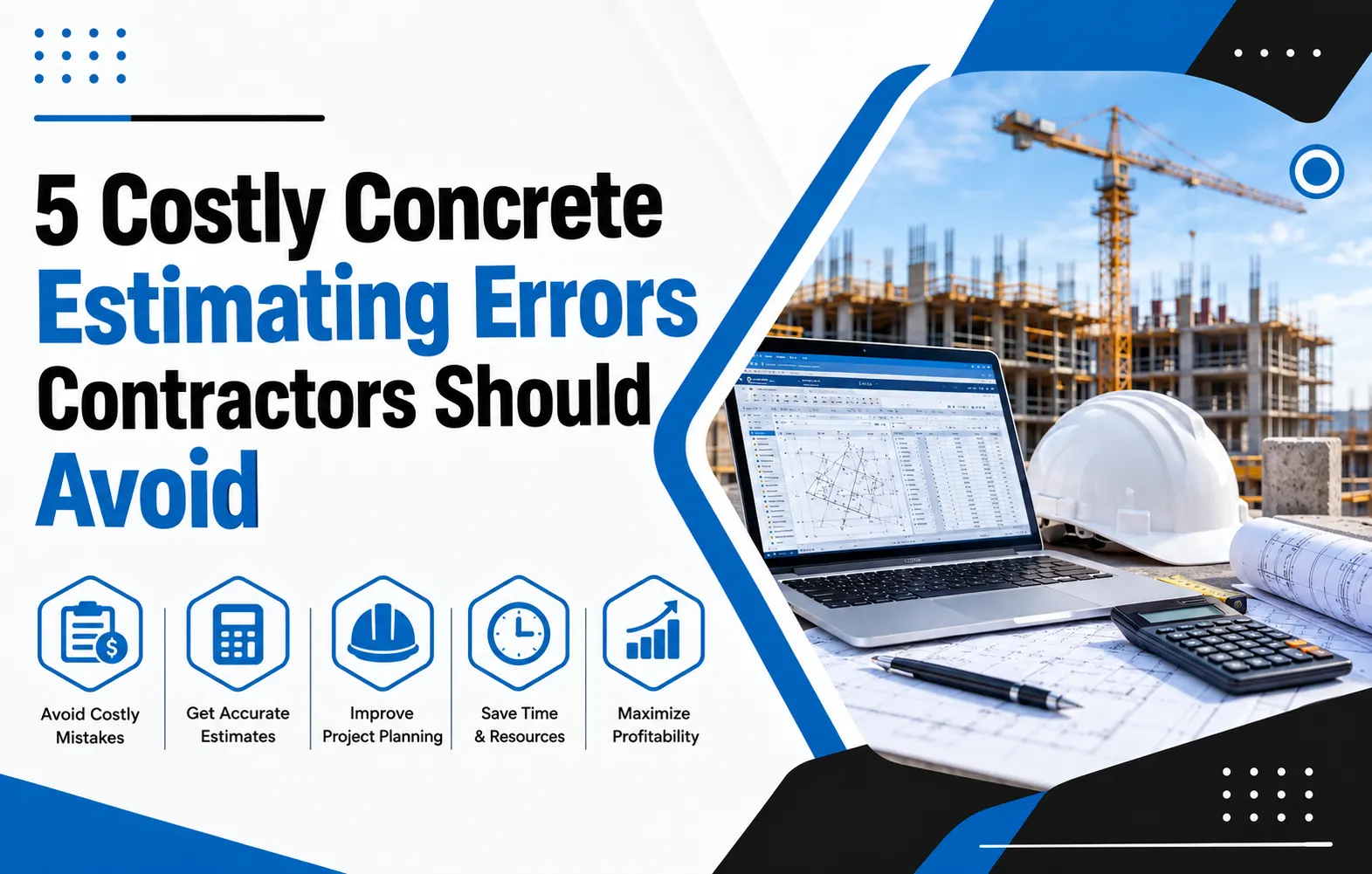
5 Costly Concrete Estimating Errors Contractors Should Avoid

Accurate concrete estimates are key to profitability and on time completion of construction projects. We see that even small errors in quantity, labor, materials, or waste can blow out project costs. Contractors which use precise calculations and Professional Concrete Estimating Services are to reduce these issues and put forth more competitive bids.

Here are 5 common mistakes in concrete estimates that contractors should steer clear of.

1. Concrete quantity issues

One also see that we put out too much or too little concrete which is a great issue. We may get wrong estimates on slabs, footings, columns, walls and other structural elements that which in turn produces large scale variation in cost.

Estimators must go over project drawings, dimensions, elevations and specs before doing quantity take off. Also note that it is important to put in for enough waste and spillage but not to over do it.

Through in depth takeoffs and review of calculations before going ahead with material orders contractors may avoid which which is what we call waste.

2. Omitting Labor Costs

Concrete estimation is a much broader process than just calculation of concrete that is required, also labor makes up a large element of the project budget.

Contractors are to look at crew size, work hours, placement issues, finish work, reinforcement tasks, equipment operation, and site conditions. Also it is noted that a too low labor estimate may see a competitive bid which in the end proves hard to complete profitably.

A good construction estimator will look at material and labor issues when putting together an estimate.

3. Neglecting Equipment and Pumping Costs

Concrete projects also may use mixers, pumps, vibrators, compactors, finishing equipment, trucks, and a variety of other machinery. To not include these in the budget may result in unexpected expenses during construction.

For instance a project that has issues with site access may require special pumping or additional equipment. Contractors should look at site conditions and project details to determine equipment needs before they finalize their estimate.

Including equipment rental, fuel, and delivery as well as operational costs in the budget gives a more accurate picture.

4. Ignoring Project Details and Site Conditions

Draw inferences from drawings is not always true. At site access, ground conditions, weather, project location, work space, and schedule restrictions play a role in concrete installation cost.

An estimator should go over all available plans, specs, site info, and addenda. To not pay attention to some details in the documents is to risk incorrect quantities or omitted work.

Contractors also may compare the estimate to past projects which in turn may bring up out of the ordinary charges or absent items.

5. Omitting to Update Material Prices

Concrete, reinforcement materials, transport, labor and equipment costs vary over time. Relying on out of date pricing will render an otherwise accurate estimate useless.

Contractors may use present supplier quotes and updated cost databases as much as possible. Also to be taken into account is delivery distance and local market conditions.

Working with professional construction estimating companies is a great way for contractors to see more consistency in pricing and improve in their bid preparation.

Why Professional Concrete Estimating Matters

A very in depth project cost analysis is given to contractors which in turn improves their understanding of what to expect from a financial perspective at the start of work. Also it is a tool which supports budgeting, bidding, procurement and project planning.

If you are in search of local estimating services, to have an estimator near you, or a professional construction estimator in your area, you will find that choosing from among the experienced providers is a smart decision which reduces the chance of error in your calculations and at the same time improves cost transparency.

Construction Estimate Help provides a service which supports contractors in the review of quantities, materials, labor, and other project costs. Professional estimating also which is put forth by us helps in better organization of the bidding process and also in the identification of what may be to come as far as cost issues in a project.

Frequently Asked Questions

Which are the primary mistakes in estimating?

Common issues are of incorrect quantity calculations, underestimation of labor, left out equipment costs, over looked site conditions, and out of date material pricing.

Why are accurate concrete estimates important?

Accurate numbers in their estimates allow contractors to create practical budgets, put together competitive bids, plan resources and also reduce the risk of unforeseen project costs.

At what point do contractors use Concrete Estimating Services?

Contractors may use professional estimating services when they are putting together bids, reviewing construction plans, preparing budgets, or with projects that have complex concrete elements.

How do I find construction estimators near me?

You may look for construction estimators in your area, or estimating services in your local area then evaluate providers by experience they have, what services they offer, the turn around time and their past projects.

Does professional estimating play a role in reducing construction costs?

Yes. A comprehensive estimate will also notice out of quantity issues, missing project elements, labor needs, equipment requirements, and price problems before work commences which in turn will allow contractors to make better informed budget reports.

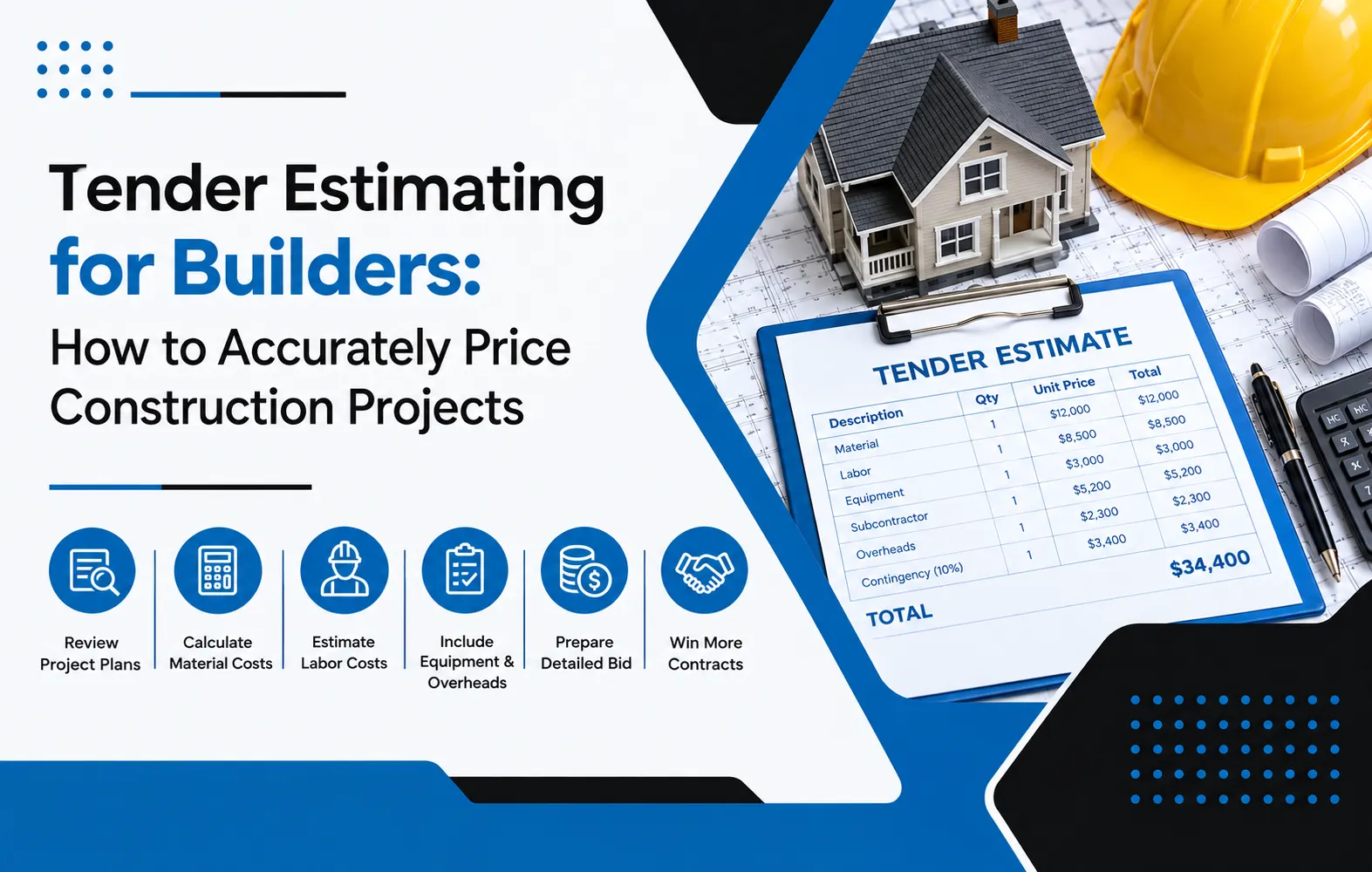
Tender Estimating for Builders: How to Accurately Price Construction Projects

Winning in the bid for construction projects is not only about putting forth the lowest price. We see that which which is competitive, realistic, and which also covers all project costs at the same time as protecting profit margins. That is what Professional Tender Estimating is about. Tender presenters which do in depth analysis of materials, labor, equipment, subcontractors and all other project expenses are better able to put forth bids with greater confidence and accuracy.

What Is Tender Estimating?

Tendering which is the process of putting together the estimated cost of a construction project before you put forth a tender or bid. We look at drawings, specs, schedules and project requirements which in turn help us determine the quantities and costs related to the work.

A very thorough estimate which is well put together helps builders to determine the project’s financial needs and also to avoid pricing errors. We see that which is too low of a cost estimate can in fact reduce profitability, also at the same time very high prices may make a tender less competitive.

Why Accurate Tender Estimating Matters

Construction projects include many different cost elements. What may be a small pricing error may in fact become a large issue when that error is present in a very large project. In terms of estimates, accuracy is key to builders.

  • Develop competitive tender prices
  • Calculate material and labour requirements
  • Identify potential project risks
  • Reduce unexpected costs
  • Protect profit margins
  • Improve bidding confidence
  • Make better subcontractor and supplier decisions

For time starved builders a professional construction estimating company will have you well covered as far the tender development process is concerned. (I’ve changed “busy” to “time starved” and “tender preparation” to “tender development” to create a parallel construction but maintain the meaning. .

Key Steps in Accurate Tender Estimating

First out is to go over all project documents in great detail. Estimators look at architectural designs, engineering plans, specs, and timelines which will help us understand the project’s scope.

Next we perform detailed quantity takeoffs. We calculate materials which include concrete, steel, timber, drywall, roofing, finishes and other construction elements according to the plans.

Labour, equipment, subcontractor charges, waste allowances, delivery costs, and other expenses are included in the estimate. Also to be looked at are current supplier and market rates which may vary as construction prices fluctuate.

In the end the estimator goes over the full calculation, checks out for any missing pieces or duplicate items, and puts in the appropriate overheads, contingencies and profit margins before the tender price is put together.

The Role of Local Estimating

Local Estimation is a useful tool which is true of the fact that construction costs differ from one region to another. Labor rates, supplier prices, transport costs, regulations, and subcontractor availability also play a role in the total project cost.

For instance in Sydney construction firms may require estimates which take into account local labor conditions, material prices, and subcontractor rates. Also it is of benefit to the builder to have an estimator that is familiar with the local market which in turn helps to put forth more competitive tenders.

Benefits of Professional Construction Estimating Services

Preparing in detail a tender estimate can take up a great deal of time which is especially true when builders are working on many projects at the same time. Professional construction estimating services give out that which builders do not have in house and thus do not have to do all the math themselves.

An experienced estimating team will do for you quantity takeoffs, material pricing, labor analysis, subcontractor pricing, bid preparation and cost analyses. Which in turn enables the builder to put that effort into project management and business development and still keep a very professional look at our tender pricing.

How Construction Estimate Help Supports Builders

Construction Estimate Help we put in the tools and resources at your disposal which in turn will aid in the preparation of exact project estimates. We cover from in depth quantity takeoffs to full cost analysis, also we have professional staff to help you out in the process which in turn will reduce errors and give you better insight in the total project cost.

When it comes to put together a small residential tender or a large commercial proposal what we see is that having reliable estimating support which is in place improves your ability to price the work in a strategic and competitive manner.

Conclusion

Accurate tender analysis is key for builders which wish to present competitive bids without sacrificing profitability. We see that which through in depth pre bid analysis, current market rates, use of local cost data, and close out project review we may build a better base for winning the bid. Also professional estimating support does play a big role, especially for builders which are handling many tenders at the same time.

Frequently Asked Questions

What does Tender Estimating entail?

Tendering for a construction project is the process of which we put together cost estimates in order to present our bid price.

What’s the value of Local Estimating?

Local Estimation of labor rates, material prices, transportation costs, and subcontractor terms is done which in turn creates more accurate project estimates.

What does construction estimation include?

Services include performing quantity takeoffs, material pricing, labor costing, subcontractor pricing, cost analysis, and tender preparation.

Do Sydney construction firms outsource estimating?

Yes. Builders and contractors may use professional estimating services to put some of that work out of house which in turn saves time and we see also very detailed cost reports come through.

What does a construction estimating company do for builders?

A construction estimation firm may review project documentation, determine quantities, do research on costs, identify what may be left out, and also assist builders in putting together competitive tender prices.

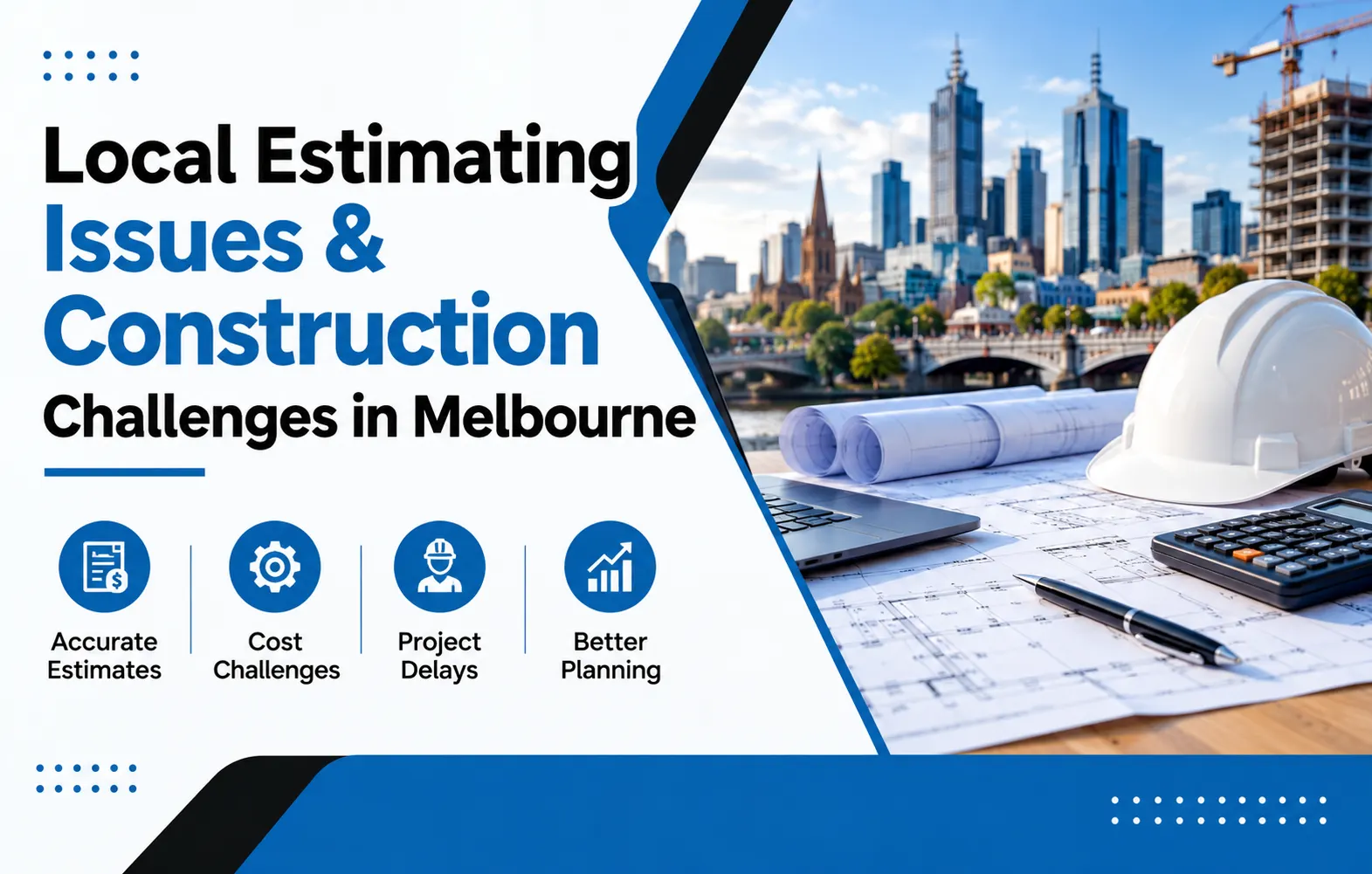
Local Estimating Issues & Construction Challenges in Melbourne

Melbourne’s construction industry is a mix of what is great and what is hard for builders, contractors, developers and property owners. We see in fluctuating material prices, complex site conditions and regulatory requirements which all out play the importance of Local Estimating in the success of a project.

A dependable estimate does more for the construction industry than to put a price tag on a project. It is a tool which allows companies to put together competitive bids, manage budgets, to reduce cost overruns, and to make better decisions pre construction.

Key Local Estimating Issues in Melbourne

In Melbourne we see that which present and up to date price info is hard to get. Labor, materials, equipment, sub contractor rates and transport costs may fluctuate based on project location, scope of the project and also the economic climate.

Local data is key. In Melbourne we see that which estimators are familiar with the construction environment are able to account for regional labor rates, supplier pricing, site access issues, and project specific requirements instead of using only generic cost databases.

Another issue is that of out of date or inconsistent project documentation. We see that which drawings, specs, and schedules are not clear which in turn causes some key elements and trades to be left out. This results in poor bid accuracy and also expensive changes during construction.

Melbourne projects also have to include local planning, building and permit requirements. In Nov 2025 Victoria introduced a new way to determine the cost of building works for building permit apps which in turn makes accurate cost info more important.

Construction Challenges Affecting Estimates

Material Cost Variations

Changes in steel, timber, concrete, fixtures, or any other material can change project budgets. Also an estimate which is based on old supplier rates may no longer present the real procurement cost.

Field and Setting Conditions

Unexpected issues with the ground can greatly increase construction costs. Soil info is key in determining foundations, excavation needs, and footing systems. In a bid to have accurate building prices Consumer Affairs Victoria recommends that you get the right foundation data.

Range of changes

Design changes after pricing can also see great differences in cost. Also it is at play that we have uncertainty with prime cost items and provisional sums which are a result of not knowing exact project elements at the time.

Regulatory Framework

Estimators need to be aware of the issues which affect a project which includes permits, building codes, energy requirements, and what the local council will allow. Also these elements may change the scope of the project as well as the total cost.

Why Professional Construction Estimating Services Matter

Working in with a professional construction estimating company is to the benefit of contractors and developers which is that they can identify what may be issues with cost before putting in a tender. Professional construction estimate services include quantity takeoffs, labor analysis, material costs, subcontractor estimates, and detailed cost breakdowns.

A structured approach in estimating will also improve the comparison of what our suppliers and sub contractors are putting forth, identify what may be missing in the scope and also put us in a better position to put forth competitive bids.

Although in the market which is Australian wide many firms are looking into construction companies in Sydney when they do research and compare services and products, in Melbourne we see that what is local is key. Using Sydney based prices for a Melbourne project will do a disservice and may put forth unachievable expectations which in turn will hurt bid accuracy.

How to Improve Local Estimating Accuracy

Construction companies may see an improvement in their estimating performance by:

  • Using present local supplier and subcontractor rates.
  • Reviewing drawings and specifications carefully.
  • Including realistic labour productivity assumptions.
  • Reviewing site and soil info before pricing.
  • Allowing for appropriate project-specific risks.
  • Updating estimates when designs change.
  • Maintaining records of previous project costs.
  • Using of experienced estimators which know local market conditions.

Accurate estimates are particularly important as variations may in fact raise the total cost of building projects and also may impact on building permit levy in Victoria.

How Construction Estimate Help Can Assist

Construction Estimate Help presents a solution which is to assist trade professionals in the development of in depth and accurate project budgets. We see that through a structured approach to quantity takeoffs, cost analysis, and local pricing which in turn helps companies to reduce estimating errors and go into tenders with more confidence.

For in Melbourne, which is what we are seeing, that which proves to be very effective is the use of accurate measures along with present local cost data.

FAQs

Q1. What do you know about Local Estimating in the field of construction?

Local Estimation is the process of preparing project costs based on pricing, labor rates, site conditions, and construction requirements which are relevant to a certain geographic market.

Q2. In what way does accurate estimating play out in Melbourne?

It is for builders to use our tools in creating accurate budgets, to put together competitive tenders, to identify risks and to avoid unexpected cost overruns.

Q3. What is the role of a construction estimating company?

A construction which does estimating may also do quantity takeoffs, present material and labor calculations, issue out subcontractor pricing, and put together in depth project cost estimates.

Q4. Can professional construction estimating services play a role in tendering?

Yes. Detailed projections which in turn may be used by contractors to better determine project costs and put forth more competitive tenders.

Q5. What causes changes in Melbourne construction estimates?

Design changes, material cost fluctuations, site issues, labor rates, subcontractor quotes, and regulatory issues all play a role in the final project cost.

How to Prepare a Precise Duct Takeoff for HVAC Construction?

A careful duct take off is a key element in the design of any HVAC project. We see that accurate takeoffs which determine exact quantities, dimensions, fittings, insulation and accessories required prior to install are performed. Also an accurate take off which reduces material waste, improves cost control, and which in turn supports more accurate project estimates is achieved. As an HVAC contractor or a construction company in Sydney you will benefit from a grasp of the take off process which in turn will make your project planning more efficient.

What Is a Duct Takeoff?

A duct takeoff is the process which involves the identification and measurement of all duct work and related components as presented in HVAC construction drawings. We see also that it includes supply ducts, return ducts, exhaust ducts, fittings, dampers, grilles, registers, insulation, and other accessories.

During takeoff we collect that info which we then use to put together a detailed material list and estimate the total HVAC construction cost.

Steps for Performing a Precise Duct takeoff

1. Review HVAC Plans Carefully

Start off by going over the latest architectural, mechanical, and HVAC drawings. Check out floor plans, duct layouts, schedules, sections and specs. Also make sure you are using the most current drawing revision to avoid working with out of date info.

2. Identify Types of Ducts and Their sizes

Document each duct section by its shape, size, material and use. Rectangular, round, and oval ducts may require separate calculations. Note on dimensions, gauge requirements, pressure classes, and material specifications.

3. Measure Duct Lengths Out

Measure out the distance of each duct run as per the plans. Digital take off software is a tool to do this which also will speed up the process and reduce human error. Also separate by duct size and type of material for accurate pricing.

4. Count of fittings and accessories

Duct systems go beyond just straight sections. In your takeoff include elbows, reducers, transitions, tees, offsets, branches, dampers, access doors, flexible connections and other fittings. Out of these components you may see cost differences at installation time.

5. Determine Insulation Needs

Determine what type of insulation is needed and how much based on project specs. Also include insulation for relevant duct sections and note if the project requires internal or external insulation.

6. Check out Numbers

Upon completion of the measurements we will compare the takeoff to mechanical schedules and specifications. We will check duct sizes, quantities, fittings and equipment connections. A second go through will identify any omissions before the estimate is finalized.

Why Professional Quantity Takeoff Services Matter

Manually preparing a detailed duct takeoff for large commercial projects is very time consuming. We have Professional Quantity Takeoff Services which present organized material quantities for use in budgeting, procurement and bidding.

Working with a good construction estimating company also puts contractors at ease that the numbers they present to clients are accurate. Professional estimators in the construction field may include in their reports the quantity takeoffs we perform as well as current material prices, labor rates, equipment costs and other project related expenses.

For contractors in Sydney that which do construction, accurate HVAC estimates play a key role in which they compete for projects that require precise bids and controlled budgets.

Common Mistakes to Avoid

Some typical duct work takeoffs which we see are using out of date drawings, leaving out fittings, measuring duct lengths incorrectly, not including insulation requirements, and also not coordinating between the HVAC and architecture drawings.

Using of standard measurement methods and check of each item before price determination will greatly reduce these errors.

Final Thoughts

A very accurate basis for HVAC construction estimates is provided by precise duct takeoff. By very carefully going over drawings, measuring duct work, counting fittings, calculating insulation, and checking quantities contractors are able to put together much more reliable project budgets. Professional estimating support which is a asset in this process also improves efficiency and enables construction teams to make better decisions as they go through the bidding and planning stages.

Frequently Asked Questions

What goes into a duct takeoff?

A duct takeoff which also includes components such as duct dimensions, shapes, fittings, dampers, insulation, grilles, registers and other HVAC elements for installation.

What is the value of duct takeoff in HVAC projects?

It is a tool for determining material quantities which in turn supports accurate budgeting, bidding, purchasing and project planning at the same time which also reduces the risk of material shortages and waste.

Can software improve duct takeoff accuracy?

Yes. Digital launch and in the case of estimation software we see that it speeds up measurements, organizes data, and reduces some of the manual calculation errors. But as for professional review, that is still very much important.

Should contractors outsource duct takeoffs?

Outsourcing is a good option for large scale projects which also have tight deadlines or when in house teams do not have the resources for estimating. Professional construction estimating services in this case will supply in depth quantities and cost info.

What can Construction Estimate do for HVAC?

Construction Estimate Pro which supports contractors with in depth quantity takeoffs and estimating solutions for better budgeting and bidding accuracy.

In-House Estimator vs Estimating Company: Which Is Better?

Accurate cost estimation is one of the most important parts of managing a successful construction project. Contractors and builders need reliable estimates to prepare competitive bids, control budgets, and avoid unexpected expenses. This often raises an important question: Should you hire an in-house estimator or work with a professional estimating company?

Both options have advantages. The right choice depends on your project volume, budget, deadlines, and long-term business needs.

What Is an In-House Estimator?

In house estimators are our employees that work directly within your construction business. They get to know your company’s pricing methods, suppliers, project types, and bidding process.

In house estimators are a benefit to contractors that work with a constant flow of projects. Our in house estimators are part of the team which allows for quick communication and easy sharing of project info.

However, we see that running an in house estimating department is expensive. Businesses may have to put in salaries, benefits, software, training, office space and other employment costs. Also during slow times the estimator may have low work.

What Is a Construction Estimating Company?

A construction estimating firm provides professional estimating support which does not require you to hire a full time employee. Also they put together in depth material takeoffs, labor estimates, quantity calculations, and project cost estimates based on construction drawings and specs.

Outsourcing construction estimates allows contractors to handle many bids at once which in turn reduces the resources put into running an in house estimating team.

For companies with variable work loads, outsource for access to skilled estimators as needed. Also it can help contractors fulfill tight bid deadlines without over loading existing staff.

In-House Estimator vs. Estimating Company

The choice between them depends on your business needs.

In-house estimators may be better when: In our house we have found that which:

  • You work on a large number of projects at all times.
  • We have an option available each business day.
  • Your projects require constant internal collaboration.
  • We are set for ongoing employee and software expenses.

Estimating companies may be better when: Evaluating companies may which is also true of:

  • Your work load varies each month.
  • You may wish to place a group of bids at the same time.
  • You want to reduce overhead costs.
  • You need specialized estimating expertise.
  • You are working under tight deadlines with limited internal resources.

For lots of small to medium sized contractors outsource construction estimating services provide flexibility instead of the long term hire of another full time employee.

Why Choose Construction Estimate Help?

Construction Estimate Help we present professional estimating support which is to help contractors, builders, subcontractors and construction businesses do better project estimates. Outsource to us the detailed estimating work which is what we do best and free up your team to focus on project management, client relationships, and securing more business.

Businesses in Sydney that are in the market for Construction Estimation can also in to use professional estimating services which will support them with putting together bids for residential, commercial and other construction projects.

Final Thoughts

In the which there is no universal answer as to which is better between in-house estimator or an estimating company. We see value in having in house professionals for organizations that have consistent estimates to put out, also at the same time we see benefit in outsourcing for what it’s scale, flexibility, and also it’s cost efficiency.

If you see changes in your work load or require additional support during busy bidding periods we may have a practical solution for that which is to partner with a professional construction estimating firm.

FAQs

Is outsource in construction cost effective?

Yes. Outsourcing can reduce on salaries, benefits, training, software and also the need for a full time estimating department.

What does construction estimating include?

Services which include quantity takeoffs, material and labor calculations, cost estimates, bid preparation, and in depth reporting.

At what point does it make sense to bring in an in-house estimator?

In house estimators work well for businesses which have a steady stream of projects and require that support on a daily basis.

Small contractors outsource estimating?

Yes. Small growing contractors may use outsourced estimating services to have access to professional expertise without the need for a full time estimator.

Does Construction Estimate do for Sydney projects?

Sure, in Sydney which is a hot bed for construction projects we see that contractors use professional estimating services which is a great support for their bid and cost plan.

What Is a Construction Takeoff and Why Is It Important?

A construction takeoff is the process which includes the identification and measurement of all the materials, quantities and components that go into a construction project. This is a key element of pre construction planning as it allows contractors, builders, estimators and project managers to know precisely what is required for a project to come together before work commences.

From brick and mortar to wood, drywall, roofings, electrical elements, and finishes, a detailed take off presents a break down of the materials required. Professional takeoff techniques also play a role in transforming project blueprints and specs into useful quantifiable data which in turn supports accurate budgeting and bid pricing.

What Does a Construction Takeoff Include?

A construction takeoff is usually a review of architectural drawings, structural plans, engineering reports, which also includes project specifications. We see in this process that estimators determine what materials will be needed and at what quantities, measurements and in what units.

In some projects a takeoff may include:

  • Concrete and masonry quantities
  • Lumber and structural materials
  • Drywall and insulation
  • Roofing materials
  • Flooring and finishes
  • Plumbing components
  • Electrical materials
  • Doors and windows
  • Sitework and landscaping materials

Today modern estimating software which does for the estimator what once required extensive man hours it includes the ability to work with digital drawings, to manage materials and labor quantities with ease, and to present detailed reports.

Why Is a Construction Takeoff Important?

1.Reduces Cost Errors

A great benefit of in depth takeoff is better cost control. We see that accurate quantities which we put into the equations allow for the use of present material and labor prices which in turn allows us to do away with a lot of guess work and we are able to create a stronger base for project budgets.

This is the reason that many contractors use construction estimating services in addition to detailed takeoff for their bids and project budgets.

2.Reduces Waste of Materials

Ordering out of what is required raises project costs, also if one orders too little it may cause delays. Accurate Construction Takeoff Services which in turn help contractors to determine better material requirements and which also reduce waste.

3.Supports Competition Based Procurement

Construction companies in some cases put out a bid which can win them the project. Also with accurate break down of the quantity contractors are able to determine what they will have to invest in terms of materials and labor before they present their bid.

Professional Construction Take off services also which in turn help contractors put together competitive bids at the same time which does not affect their bottom line.

4.Saves on Time

Manually going through large sets of construction drawings is very time consuming. Outsource takeoff to professional estimators which will allow contractors to put their energy into bidding, project management, and client communication as well as other key tasks.

5.Improves Project Planning

A take off is also a useful tool in bidding. We also see value in it for procurement and scheduling. With it project teams are able to determine material requirements which in turn allows for better coordination of construction activities.

Construction Draw Takeoff for Various Projects

Construction Quantification Services we see to residential, commercial, industrial, and renovation projects. Per project requirements estimators may put together trade specific takeoffs or a full material report.

For contractors in Australia that is also the case where Local pricing, construction practices, and project requirements come into play, our services in Sydney are very much at your service.

Why Choose Professional Takeoff Services?

Preparing exact takeoffs requires attention to detail, knowledge of construction materials, and the ability to read drawings well. We also see that professional services which put together quantity reports which in turn make the estimating and bidding process smoother.

At Build Estimate Pro contractors and construction professionals have access to our estimating tools which we designed to simplify the pre construction process. We offer Local Construction Takeoff Services and also in depth estimating support for very specific needs. Professional support from our team also helps to improve efficiency and reduce large scale quantity issues.

Conclusion

A construction take off is the base for accurate estimating, material purchase, bidding, and project planning. Through precise identification of what quantities are needed we see that contractors are able to do better financial planning, reduce waste, and put forth more reliable project proposals.

For companies that are managing many bids at once or large scale construction drawings we see value in Professional Construction Takeoff Services which in the end saves time and increases confidence in the estimating process.

Frequently Asked Questions

What is a construction takeoff?

A construction take off is outlay of materials and quantities for a given construction project as per drawings, plans and specifications.

Who uses construction takeoff services?

Contractors, subcontractors, builders, developers, estimators, and construction companies use in fact what are known as takeoff services for their project’s budget, bid, procurement, that which is related to construction.

How in which a construction takeoff improves estimating?

A in depth take off which is very detailed gives out accurate material quantities which in turn allows estimators to put in better labor and other cost estimates which also reduces assumptions.

Can take off operations play a role in waste reduction?

Yes. More precise quantity calculations will reduce instances of over order which in turn will also minimize issues of material scarcity in construction.

Why do I need professional construction takeoff services?

Professional estimators also save time, interpret complex drawings, organize material quantities, and present detailed info that which in turn gives you more accurate construction estimates and bids.