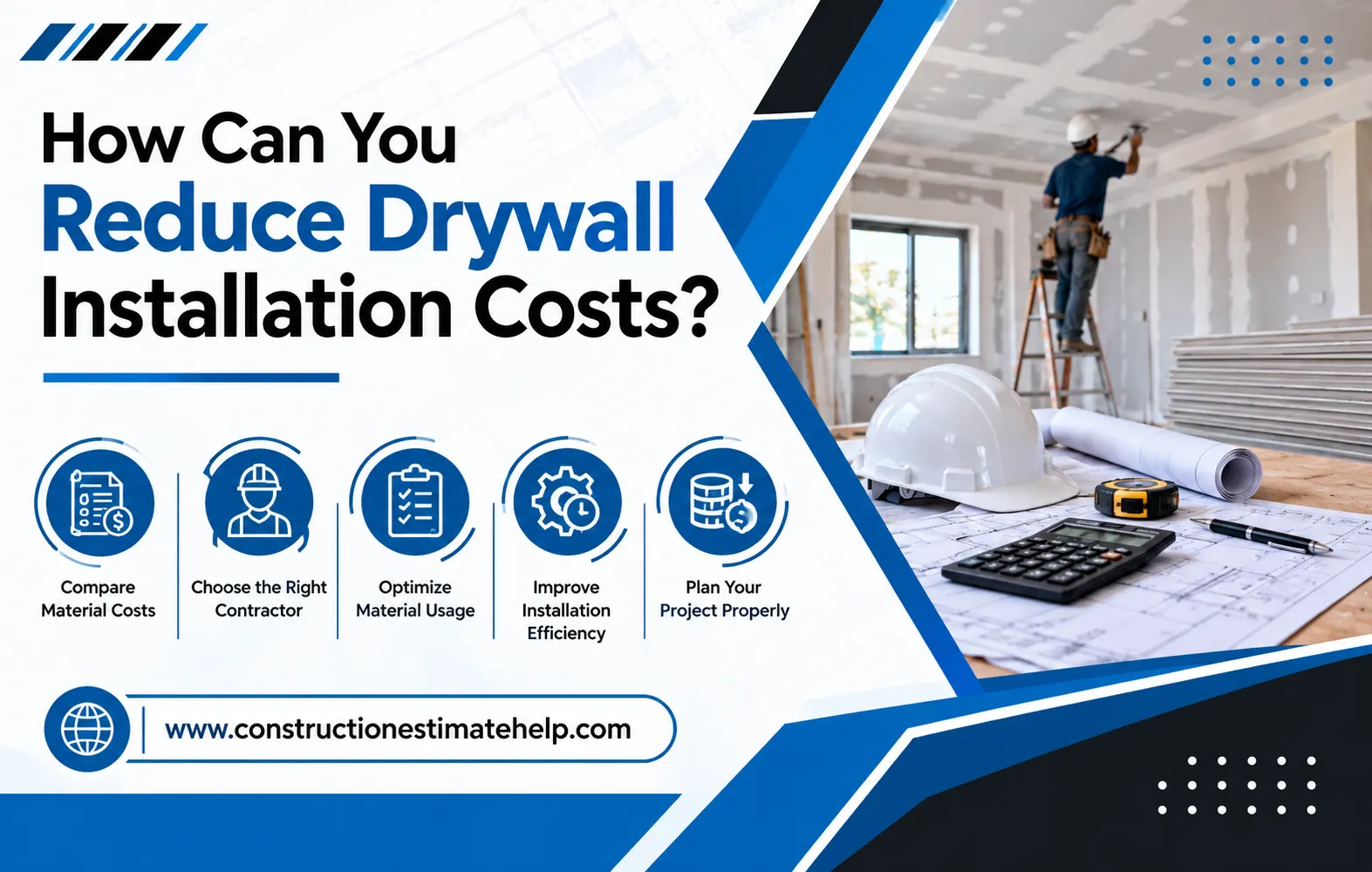
Drywall installation is an essential part of residential and commercial construction, but material waste, labor expenses, and inaccurate measurements can increase project costs. Whether you are renovating a home, building a new property, or managing a commercial project, careful planning can help you stay within budget without compromising quality.
Understanding the cost of drywall per square foot allows homeowners, contractors, and builders to compare estimates, control expenses, and make informed decisions. With accurate quantity calculations and professional construction estimating services, you can identify potential savings before installation begins.
What Is the Average Cost of Drywall per Square Foot?
The average cost of drywall per square foot depends on material type, thickness, labor rates, project size, and finishing requirements. Standard drywall generally costs less than moisture-resistant, fire-resistant, or specialty drywall.
The cost of drywall per square foot installed includes both materials and labor. Additional expenses may include framing preparation, fasteners, joint compound, taping, sanding, finishing, and waste disposal.
For an accurate estimate, compare local contractor quotes and confirm which services are included. Prices can vary significantly between cities and regions, so use current local rates rather than relying on a single national average.
7 Effective Ways to Reduce Drywall Installation Costs
1. Measure Walls and Ceilings Accurately
Accurate measurements help prevent overordering and unnecessary material expenses. Calculate the total wall and ceiling area, then subtract large openings such as windows and doors where appropriate.
A detailed drywall takeoff identifies the number of sheets, fasteners, joint compound, and other supplies required. This approach helps contractors purchase the right quantities and reduce leftover materials.
2. Choose the Right Drywall Type
Standard drywall is suitable for many interior walls and ceilings. However, bathrooms, utility rooms, garages, and fire-rated areas may require specialized products depending on building codes and project specifications.
Avoid choosing materials based on price alone. Using the correct drywall type helps prevent moisture damage, compliance issues, and expensive repairs later.
3. Minimize Material Waste
Poor cutting plans can leave contractors with unusable drywall scraps. Plan sheet layouts carefully, consider standard sheet dimensions, and reuse suitable offcuts wherever practical.
Ordering a reasonable waste allowance is also important. The required allowance depends on room shape, ceiling height, openings, and installation complexity.
4. Compare Local Labor Rates
Labor costs vary according to location, project complexity, contractor experience, and finishing standards. For example, drywall installation rates in Dallas may differ from those in Orlando or other US cities.
Request itemized quotes from several qualified contractors in your area. Compare the scope of work, finishing level, cleanup, and materials rather than selecting the lowest price automatically.
5. Prepare the Work Area Before Installation
A clean, accessible worksite can improve productivity. Complete necessary framing corrections, organize materials, confirm measurements, and coordinate electrical and plumbing work before drywall installation.
Proper scheduling reduces delays, repeated labor, and additional contractor visits.
6. Use Professional Construction Estimating Services
Professional construction estimating services help builders calculate material quantities, labor requirements, and projected project expenses. A detailed estimate can highlight unnecessary purchases, potential cost overruns, and opportunities to improve material usage.
ConstructionEstimateHelp supports contractors, builders, and property owners with construction estimating and quantity takeoff requirements, helping them plan projects with greater cost awareness.
7. Balance DIY Work With Professional Installation
Homeowners may reduce expenses by handling suitable preparation tasks, such as clearing rooms or organizing materials. However, hanging drywall, finishing joints, and meeting fire-rated assembly requirements can demand specialist skills.
Evaluate the potential labor savings against the risks of poor finishing, wasted materials, and rework. Professional installation may offer better overall value for complex projects.
Read More: Drywall Replacement Cost vs. Drywall Repair: What’s the Difference?
How Can You Calculate Drywall Installation Costs?
Start by measuring the total surface area and estimating the quantity of drywall sheets needed. Next, add material prices, installation labor, finishing supplies, equipment, disposal, and applicable taxes.
Example: If a project requires 1,000 square feet of drywall and the estimated installed rate is $2.00 per square foot, the preliminary installation budget would be $2,000.
This is an illustrative calculation, not a current market quote. Actual costs depend on local pricing, drywall specifications, ceiling work, finishing requirements, and site conditions.
Frequently Asked Questions
How can I reduce the cost of drywall per square foot?
Measure accurately, minimize cutting waste, compare contractor quotes, select suitable materials, and plan installation activities before work begins.
Does the cost of drywall per square foot installed include labor?
Usually, an installed rate includes drywall materials and installation labor, but inclusions vary. Confirm whether taping, finishing, sanding, texture, and cleanup are covered.
Is drywall cheaper to install in larger projects?
Larger projects may benefit from bulk material purchasing and improved labor efficiency. However, final savings depend on project complexity, access, and contractor pricing.
Why should contractors use construction estimating services?
Construction estimating services help calculate quantities, forecast costs, manage material purchases, and reduce the risk of budget overruns.
How can I get an accurate local drywall estimate?
Measure the project area, specify the drywall type and finish, and request itemized quotes from local contractors. A professional quantity takeoff can provide a more reliable starting point.
Conclusion
Reducing drywall installation costs starts with accurate measurements, sensible material selection, effective scheduling, and careful waste management. Comparing local labor rates and using professional construction estimating services can also help contractors and property owners make better budgeting decisions.
For residential and commercial projects, ConstructionEstimateHelp can support more informed planning through construction cost estimating and quantity takeoff services.